The list is compiled by researchers at Stanford in collaboration with the publisher Elsevier and is considered one of the most prestigious rankings of researchers’ influence and impact.
The Stanford list is based on how often scientific work is cited and whether the researcher is sole author, first author or last author. It does not measure the number of publications, but how often an article is cited and used by other researchers.
Proud and pleased
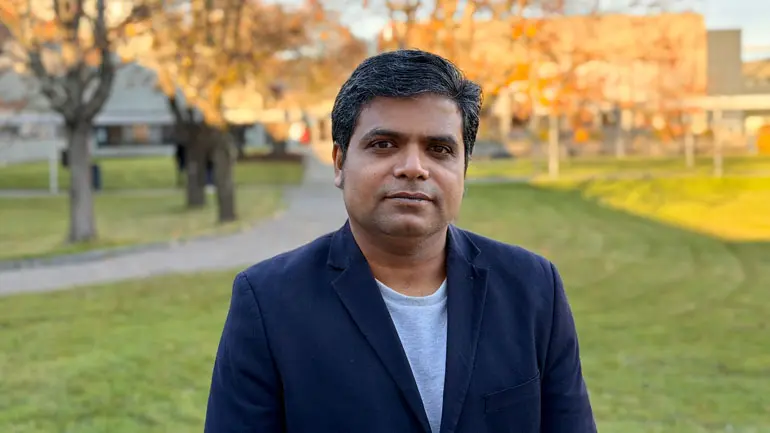
Sanjeevikumar Padmanaban is on the Stanford list for the seventh year in a row. He is ranked 53rd out of a total of 133,000 researchers in the world in the field of electrical and electronic engineering. In Norway, he is ranked second in his field.
Professor Padmanaban came to USN almost four years ago, and he is very happy about that:
– Above all, it is a great honour and a privilege to be included on the Stanford/Elsevier list. The recognition is the result of joint work involving my research, partners, colleagues, students, co-researchers and the University of South-Eastern Norway (USN). It is inspiring to work together with so many good colleagues, including in the research group on electrical power systems, says the professor.
Padmanaban’s speciality is hybrid renewable energy systems. He also teaches on the master’s in Electrical Power Engineering.
He himself believes that consistent and substantial research contributions, a strong dedication to scientific quality, and a long-term commitment to developing knowledge in electrical engineering, power electronics, renewable energy and sustainable energy technologies are the reasons he is listed.
Among the world’s most cited language researchers
Among the other USN researchers who stand out on this year’s list, we find Associate Professor Raees Calafato at the Faculty of Humanities, Sports and Educational Sciences. Calafato is ranked 246th out of nearly 26,000 researchers in the field of “Language and Linguistics”. That places him among the one per cent most influential language researchers internationally over the past year. In Norway, he is ranked as the 3rd most influential language researcher in 2025.
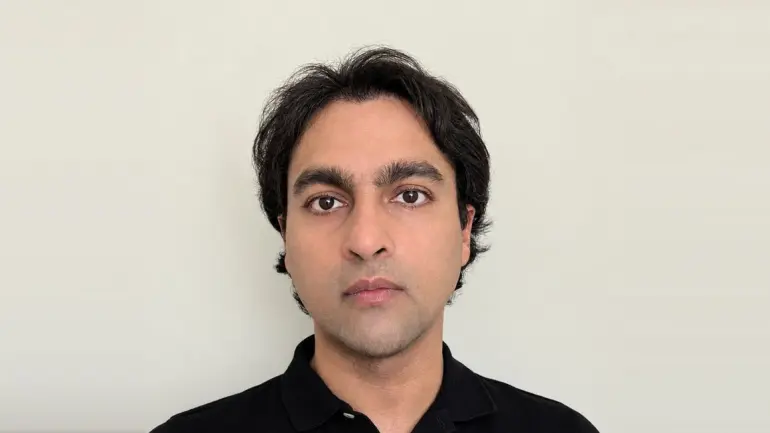
In addition to being a highly active researcher with many publications, Calafato is also an editorial board member or editor for a number of international journals. He believes the reason he is highly ranked is linked to his research being seen as practical and relevant to language teaching.
– Much of the work has taken place in close collaboration with teachers in schools and teacher trainees, both in Norway and in other countries, and that means the questions arise from the classroom. I have also used many different methods and approaches, both quantitative, qualitative and combinations of these. I think that makes the research interesting to more readers than it would otherwise reach, says Calafato, who is a member of the research group on multilingualism, learning and development.
The ranking motivates Calafato to continue the work, and he hopes the placement can make research on language and teacher education at USN more visible and make it easier to establish new contacts, both nationally and internationally.
Breadth and quality in research
 USN has several universities and research institutes ahead of it in the national ranking and UiO is ranked highest, in 1st place nationally.
Pro-Rector for Research Heidi Ormstad is pleased to find 18 USN researchers on Stanford-Elsevier’s top 2 per cent list:
– This shows that their research has considerable scientific impact internationally, and that the knowledge they develop is cited and forms part of the basis for further research. It is particularly pleasing that the researchers represent so many different academic environments. It highlights the breadth of research at USN and shows that our researchers are part of international scientific knowledge development across many different fields.