Competences
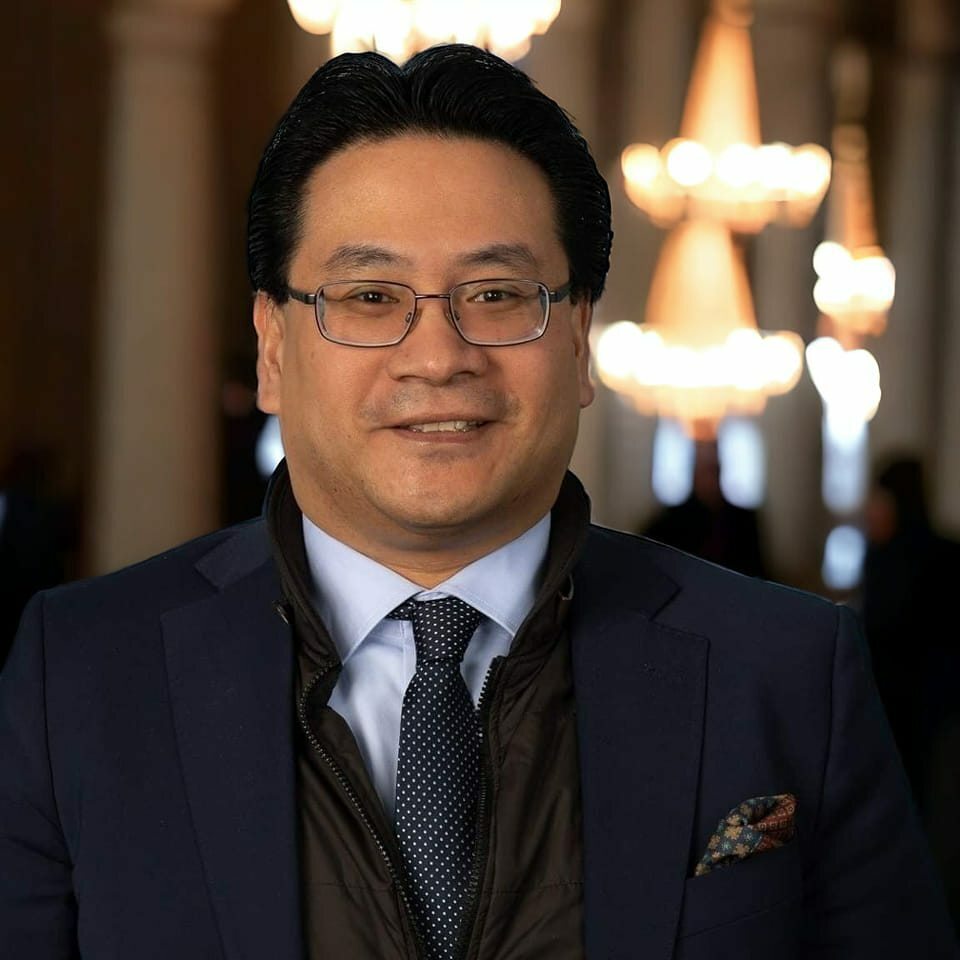
Dr Glenn Agung Hole is a Norwegian institutional economist, geo-economic analyst, Associate Professor and founder of The Institutional Capital Project (www.institutionalcapital.org). His work examines how institutions, capital, entrepreneurship, trust, leadership and governance systems interact to shape long-term prosperity, innovation capacity, competitiveness and societal resilience.
At the centre of his work is a deceptively simple question: why are some societies able to transform knowledge, capital, technology and human capability into lasting productive and strategic capacity, while others struggle to do so?
Through The Institutional Capital Project, Hole is developing an interdisciplinary framework for understanding how societies, organisations and nations build, maintain and reproduce the institutional foundations of prosperity across generations. The project sits at the intersection of institutional economics, entrepreneurship, innovation systems, geo-economics, geopolitics and strategic management.
Rather than treating capital, technology, education or institutional reform as isolated variables, his work focuses on the mechanisms through which they are connected. A society may attract investment, possess natural resources, expand its universities and adopt sophisticated policies without necessarily strengthening its underlying productive capacity. The decisive question is whether institutions are capable of converting these resources into firms, knowledge, competence, innovation and strategic capabilities that can be retained, renewed and reproduced over time.
This perspective is increasingly reflected in Hole's work on institutional conversion capacity: the ability of an economy or institutional system to transform external investment, knowledge, technology, market access and human capital into durable domestic capabilities.
Academic position and professional background
Hole is an Associate Professor at the University of South-Eastern Norway (USN), where his academic work is centred on entrepreneurship, economics, innovation, interdisciplinary collaboration and institutional capacity.
USN profile:
https://www.usn.no/kontakt-oss/tilsette/glenn-agung-hole
English USN profile:
https://www.usn.no/english/about/contact-us/employees/glenn-agung-hole
He also serves as an Associate Professor at HØFY – University College of Vocational Studies, where his work covers economics, management, sustainability and applied higher education.
His academic work builds on approximately 28 years of experience in Norwegian and Nordic business and industry, including executive management, board leadership, strategic advisory work and large-scale organisational transformation.
Hole has worked across listed companies, medium-sized enterprises, service organisations and academic institutions. This combination of operational leadership and academic research has shaped an approach in which institutions are not treated as abstract structures, but as systems that influence investment, ownership, entrepreneurship, innovation and organisational behaviour in practice.
Over the course of his business career, he held chief executive and senior management positions in organisations ranging from approximately 100 to 1,800 employees. He has led programme organisations involving more than 60 project managers and has been responsible for complex transformation initiatives in capital-intensive and highly regulated environments.
His previous executive and leadership experience includes Probo Eiendom Invest ASA, Drammen Taxi AS, Muritunet AS and Fretex Miljø AS, as well as strategic transformation roles associated with Lindorff, Orkla and Sønnico. He has also served as Chairman of Virke Rehab, now part of Virke Helse.
This operational experience provides an important foundation for his later work in institutional economics. His research and public analysis therefore frequently connect macro-level institutional questions to what happens inside firms: how investment decisions are made, how ownership is structured, how knowledge is translated into organisational capability, and how regulation alters the incentives facing entrepreneurs and investors.
Education and intellectual foundations
Hole holds a Ph.D. in Management Science, with research rooted in strategic management and the development and application of the TIPS methodology.
He also holds an MBA in International Management, with strategic work undertaken for the executive management of Statkraft; an Advanced Diploma in Management, developed in relation to Edda Media, now Amedia; and a Diploma in Supply Chain Management, including applied work for the Norwegian fruit and vegetable information organisation.
Across these qualifications, a consistent theme has been the application of strategy to real institutional and organisational problems involving capital, governance, technology, organisational capability and international competitiveness.
Hole developed the TIPS model – Technology, Intellectual Capital, Process and Strategy – as an integrated framework for organisational development and strategic transformation.
The framework has subsequently informed a broader interest in how organisations and societies combine technological capacity, knowledge, processes and strategic direction to build resilience and adaptive capacity.
International academic appointments
Hole's academic work has developed an increasingly international dimension, spanning the Nordic region, the Western Balkans, Central Asia and Africa.
Kazakhstan
On 28 November 2024, Hole was appointed Honorary Professor at Sarsen Amanzholov East Kazakhstan University, recognising his contribution to international academic collaboration and educational diplomacy.
His engagement with Kazakhstan has subsequently expanded into institutional economics, innovation, entrepreneurship, geo-economics, strategic capacity and international policy dialogue.
Tanzania
Hole is Visiting Professor at the University of Dar es Salaam Business School (UDBS), University of Dar es Salaam, Tanzania.
The appointment forms part of his wider academic work on entrepreneurship, institutional economics, innovation systems, sustainable economic development and institutional capability.
Official University of Dar es Salaam announcement:
https://www.udsm.ac.tz/news/welcome-dr-glenn-agung-hole-visiting-professor
University of Dar es Salaam Business School:
https://www.udsm.ac.tz/index.php/t/udbs
LinkedIn appointment:
Democratic Republic of the Congo
Hole is Distinguished Visiting Professor at Université Chrétienne de Kinshasa (UCKIN) in the Democratic Republic of the Congo.
His engagement includes entrepreneurship, institutional economics, innovation, research cooperation, academic capacity-building and international university collaboration.
https://uckin.com/blog-details.php?idAnnonce=15
He is also Distinguished Visiting Professor at Université Nationale de la Décentralisation (UND) in Kinshasa.
The appointment provides a framework for research, academic development, entrepreneurship, institutional capacity-building and international scientific collaboration.
https://und.cd/news/accord-de-nomination-en-qualite-de-professeur-visiteur-distingue
These appointments are part of a broader interest in the relationship between entrepreneurship, institutional capability, human capital and sustainable economic development in African economies.
Albania
Hole is Visiting Professor at the University of Shkodër “Luigj Gurakuqi” in Albania, with academic engagement in areas including economics, corporate finance, strategic management and institutional economics.
He is also an Invited Academic Contributor to Tirana Observatory at the Albanian Institute for International Studies (AIIS).
Through AIIS, his work contributes to analysis of the Western Balkans, European integration, institutional capacity, geo-economics and regional development.
North Macedonia
Hole is Visiting Professor at Mother Teresa University in Skopje, North Macedonia.
His engagement centres on entrepreneurship, innovation, economic development, institutional capacity and international academic cooperation.
University:
LinkedIn appointment:
His work in North Macedonia forms part of a wider Western Balkans research and cooperation agenda focusing on entrepreneurship, innovation systems, institutional capacity, European integration and economic convergence.
Kosovo
Hole is engaged in academic cooperation with Public University “Kadri Zeka” in Gjilan, Kosovo, including academic mobility, teaching, international cooperation and participation in the university's international scientific activities.
He has also served as an invited keynote speaker at the university's international academic conference, addressing entrepreneurship, innovation, institutional resilience and Europe's changing geo-economic environment.
His engagement in Kosovo also extends to dialogue with policy and security research environments on institutional resilience, governance, regional cooperation and the relationship between economic development and societal stability.
International think tanks and policy institutions
Alongside his university appointments, Hole is increasingly active within international think-tank and policy environments.
Strategers Institute
Hole is associated with Strategers Institute as an Institutional Economist & Geo-economic Analyst, with a geographical focus covering the Nordic countries, the Western Balkans, Central Asia and Africa.
His work with Strategers addresses institutional capacity, innovation, entrepreneurship, European integration, economic convergence and strategic development.
https://www.strategers.org/people/glenn-agung-hole/
Through Strategers, he published the analytical brief “Beyond Convergence: Innovation, Institutional Capacity and the Strategic Future of the Western Balkans”, examining why market integration and formal convergence alone are insufficient to generate sustained economic transformation.
The analysis develops the argument that the Western Balkans must strengthen their ability to convert capital, knowledge, entrepreneurship, infrastructure and external integration into locally embedded productive capacity.
CFive – Astana, Kazakhstan
Hole is a Non-Resident Fellow at CFive, a strategic think tank and intellectual platform based in Astana, Kazakhstan.
CFive Non-Resident Fellows:
https://cfive.org/non_resident_fellows
CFive focuses on Central Asia's evolving geopolitical and geo-economic role, including politics, economics, security, emerging technologies, international connectivity and the development of the C5+ formats.
Hole contributes perspectives from institutional economics, governance, entrepreneurship, economic development and geo-economics, particularly around the question of how Central Asian states can convert investment, natural resources, technology and international connectivity into sustainable domestic and strategic capacity.
Albanian Institute for International Studies
Through the Albanian Institute for International Studies (AIIS), Hole contributes to Tirana Observatory as an invited academic writer.
His work focuses on institutional development, the Western Balkans, European integration, geo-economics and the changing strategic environment of South-East Europe.
International Education Management Agency
Hole is an Advisory Board Member of the International Education Management Agency (IEMA) in London.
His contribution includes international higher education, strategic development, institutional capacity and the relationship between academic institutions, economic development and international cooperation.
Beyond formal affiliations, Hole participates in international policy dialogue involving universities, research institutions, think tanks and strategic-policy environments across Europe and Central Asia. This has included engagement around institutional resilience, connectivity, entrepreneurship, innovation, geo-economics and state capacity.
Institutional economics and geo-economics
Hole's work is grounded in the view that economic outcomes cannot be understood through capital, natural resources or technology alone.
The institutional environment determines whether resources are transformed into productive capacity.
His research and analysis therefore examine the interaction between institutions and economic actors across areas such as:
-
entrepreneurship and regional entrepreneurial ecosystems;
-
capital mobility and international investment flows;
-
ownership structures and long-term domestic ownership;
-
institutional trust and state legitimacy;
-
taxation and its effects on investment, entrepreneurship and capital allocation;
-
innovation systems and knowledge transfer;
-
foreign direct investment and domestic capability formation;
-
economic convergence and institutional conversion capacity;
-
strategic state capacity in small open economies;
-
technological sovereignty and industrial capability;
-
societal and economic resilience; and
-
the changing geo-economic relationship between Europe, the United States and Asia.
As a geo-economic analyst, Hole studies how governments increasingly use trade, investment, taxation, regulation, technology, financial systems, infrastructure and institutional arrangements as instruments of strategic power.
His work places particular emphasis on the consequences of political decisions for capital flows, investment behaviour, entrepreneurship, ownership structures, industrial capacity and national freedom of action.
The analytical foundations of this work draw on institutional economics, strategic management, entrepreneurship research and geo-economics, alongside intellectual influences including Albert O. Hirschman's work on trade, dependency and asymmetric economic power, and insights from the Austrian tradition of economics concerning entrepreneurship, dispersed knowledge, capital structures, incentives and the limits of centralised economic coordination.
Hole's broader argument is that economic policy cannot be separated from institutional and strategic consequences. Tax regimes, ownership structures, investment rules and industrial policy do more than affect short-term economic indicators. Over time, they influence who owns productive assets, where capabilities accumulate, where entrepreneurs choose to build companies, and whether a society maintains the capacity to shape its own economic future.
Media commentator and international writer
Alongside his academic work, Hole is an active writer, commentator and analyst in Norwegian and international media, focusing on institutional economics, geo-economics, geopolitics, entrepreneurship, taxation, capital, competitiveness, industrial development and strategic state capacity.
He is a regular contributor to Geopolitika, The London Post and Bruxelles Korner.
Geopolitika
Hole serves as an economics commentator and regular writer for Geopolitika, where his work addresses geo-economics, institutions, European competitiveness, security, taxation, capital and geopolitical developments.
Author profile:
https://geopolitika.no/author/glenn-a-hole/
The London Post
Hole is a regular contributor and political and geo-economic analyst for The London Post, writing on institutional economics, geo-economics, capital, taxation, European competitiveness, Central Asia and the changing international order.
His contributions include analyses of Eurasia, Central Asia, national ownership, taxation and the relationship between economic institutions and strategic capacity.
Bruxelles Korner
Hole is also a regular contributor to Bruxelles Korner, where his work reaches an international European readership in both English and French.
His contributions address institutional economics, European industrial development, artificial intelligence, human capital, ownership, taxation, Kazakhstan, Central Asia and European strategic capacity.
https://www.bruxelleskorner.com/
Wider Norwegian and international media
In Norway, Hole has also published analyses, opinion pieces and commentary through outlets including Finansavisen, Investornytt and Sunnmørsposten.
Internationally, his work and commentary have been published, translated, interviewed or otherwise carried by outlets and platforms including EM Insight, EUalive, Revue Conflits, Giornale Diplomatico, ISIA Newsletter, Al-Ahram Business, Silk Way TV, BAQ.KZ, DKNews, Free Eurasia and Top Media Group.
This media work is closely integrated with his academic agenda. Rather than treating public commentary as separate from research, Hole uses contemporary economic and geopolitical developments to examine how institutional arrangements operate under pressure.
His writing frequently asks how political decisions eventually materialise in investment decisions, ownership structures, industrial capacity, entrepreneurial activity and the strategic room for manoeuvre available to states.
Teaching, interdisciplinary education and mentoring
Hole's academic work is strongly practice-oriented.
At the University of South-Eastern Norway, he has worked with entrepreneurship, interdisciplinary education, engineering students, innovation and university–industry collaboration.
His approach emphasises that interdisciplinary work requires more than bringing different professional backgrounds into the same room. It requires institutional arrangements that allow knowledge to be integrated, translated and ultimately converted into decisions and implementation.
He has also been a guest lecturer at Molde University College in areas including digital strategy, change management and transformation, connecting technological change with competitiveness and institutional conditions.
He has taught at Hauge School of Management (NLA) in microeconomics, macroeconomics and sustainability, with particular attention to capital, incentives, regulation and entrepreneurship in small open economies.
He previously held an Associate Professor II position at Molde University College.
Mentoring has also formed a significant part of his academic engagement. For more than a decade, Hole has worked with students and young entrepreneurs through university mentoring environments, including the University of South-Eastern Norway and international academic networks.
This experience has contributed to his research interest in mentoring as an institutional mechanism for transferring tacit knowledge, strengthening entrepreneurial capability and improving the ability of small firms to navigate complex ecosystems.
International recognition
Hole's international work and wider civic engagement have also been recognised through a number of honorary distinctions.
In 2020, he was awarded the Grand Cross of the Order of the Eagle of Georgia for international, humanitarian and church-related engagement.
https://www.dagsavisen.no/nyheter/ridder-glenn-fra-drammen/7118055
In 2023, he was commissioned a Kentucky Colonel, an honorary distinction of the Commonwealth of Kentucky in the United States.
https://www.linkedin.com/pulse/dr-glenn-agung-hole-appointed-kentucky-colonel-united-hole-ph-d-/
In 2026, he received the Freedom of the City of London, one of the historic civic traditions associated with the City of London.
https://www.investornytt.no/etter-bors/glenn-agung-hole-hedret-i-london/531190
Connecting academia, business and strategic policy
The common denominator across Hole's research, international appointments, business experience and public analysis is institutional capacity.
Capital alone does not create development.
Investment alone does not create innovation.
Universities alone do not create knowledge economies.
Foreign direct investment does not automatically generate domestic capability.
And political reform does not automatically create effective institutions.
What matters is the capacity of institutions to connect resources and actors in ways that generate productive outcomes.
This is why Hole's work increasingly focuses not simply on whether countries possess capital, technology, knowledge or human resources, but on whether they possess the institutional structures required to convert those assets into productive and strategic capacity.
This perspective connects his work across Norway, the Western Balkans, Central Asia and Africa.
It also connects his different professional worlds: academic research, executive leadership, entrepreneurship, international university cooperation, think-tank engagement and public policy analysis.
The central question remains the same:
What enables a society not merely to create prosperity, but to preserve, renew and reproduce the capabilities that make prosperity possible?
That question lies at the core of The Institutional Capital Project and Glenn Agung Hole's wider work as an institutional economist and geo-economic analyst.
Selected institutional links
The Institutional Capital Project
http://www.institutionalcapital.org
TIPS Model
https://tipsmodel.org/
University of South-Eastern Norway
https://www.usn.no/kontakt-oss/tilsette/glenn-agung-hole
Strategers Institute
https://www.strategers.org/people/glenn-agung-hole/
CFive
https://cfive.org/
CFive – Non-Resident Fellows
https://cfive.org/non_resident_fellows
Sarsen Amanzholov East Kazakhstan University
https://vku.edu.kz/dr-glenn-agung-hole-appointed-honorary-professor-at-sarsen-amanzholov-east-kazakhstan-university/
University of Dar es Salaam
https://www.udsm.ac.tz/news/welcome-dr-glenn-agung-hole-visiting-professor
Université Chrétienne de Kinshasa
https://uckin.com/blog-details.php?idAnnonce=15
Université Nationale de la Décentralisation
https://und.cd/news/accord-de-nomination-en-qualite-de-professeur-visiteur-distingue
Mother Teresa University
https://unt.edu.mk/
University of Shkodër “Luigj Gurakuqi”
https://www.unishk.edu.al/
Public University “Kadri Zeka”
https://uni-gjilan.net/
Albanian Institute for International Studies
https://www.aiis-albania.org/
International Education Management Agency
https://iema.org.uk/
Geopolitika
https://geopolitika.no/author/glenn-a-hole/
The London Post
https://www.londonpost.news/
Bruxelles Korner
https://www.bruxelleskorner.com/
Publications
Improving recycling of textiles based on lessons from policies for other recyclable materials
Recycling as the way to greener production