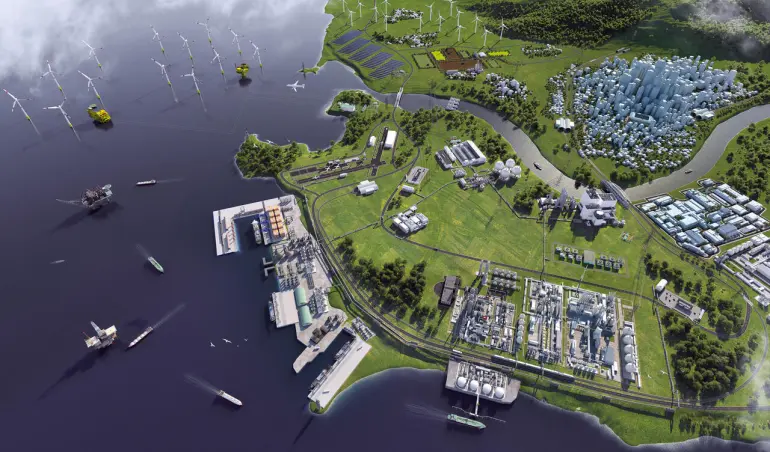
From Tacit Knowledge to Robust Solutions
The development of modern technology systems is becoming increasingly demanding. The systems are larger, more interconnected, and more dependent on smart solutions to be safe, sustainable, and reliable. The project "Complex Systems" at CELECT works closely with industry to meet precisely these challenges.
We help businesses understand, develop, and improve their complex systems – from idea and design to finished product and throughout the entire lifetime.
How We Do It
1. Make Tacit Expert Knowledge Accessible
The most important system knowledge in industry resides in the minds of those who work there. This knowledge is difficult to transfer and even harder to standardise.
We therefore work directly within ongoing industrial projects to:
- identify and highlight critical experiences and decisions
- develop methods to document and share this knowledge
- strengthen competence transfer to new engineers and project teams
This makes companies less vulnerable, more efficient, and better equipped for future projects.
2. Develop Better Methods for the Design of Complex Systems
When systems are integrated, unforeseen effects often arise that can increase risk, but also bring opportunities.
We assist industry with:
- methods to predict and manage emergent system behaviour
- design principles that work across disciplines, platforms, and levels
- system architectures that offer better control and flexibility
This makes development processes more robust and reduces risk early in projects.
3. Lifecycle Methods That Ensure Quality All the Way Through
A system must function – not only at delivery, but throughout its entire lifespan.
Therefore, we develop tools and frameworks that make it possible to evaluate:
- robustness
- safety
- sustainability
- performance and functionality
Everything from design phase to operation and upgrades. This way, businesses can make better decisions early, with lower costs and greater accuracy.
Why This Is Important
Technology projects today are affected by:
- increasing complexity
- the need for sustainable and safe solutions
- rapid technological development
- challenges in transferring experience between generations of engineers
We provide the industry with the tools and knowledge required to develop systems that withstand future demands.
Who Benefits from This?
- system architects and systems engineers
- project managers and technical leaders in large technology and development projects
- researchers and PhD students within systems engineering
Collaboration Across Industry and Academia
We conduct research together with leading players within:
- defence and aerospace (KDA, Nammo, NDMA)
- maritime industry (Kongsberg Maritime, TechnipFMC, Siemens Energy)
- small and medium-sized technology companies
Our research is always tested in real industrial environments – ensuring that the methods actually work in practice.
The Road Ahead
In the coming years, we will develop four new concepts that can change the way we work with systems engineering. This includes:
- new architectures,
- better ways to share knowledge,
- a framework to integrate sustainability and safety,
- new methods for interdisciplinary collaboration with artificial intelligence.
Our Experts in Complex Systems
Kristin Falk at USN leads the work in collaboration with colleagues from NTNU and UiA.
Kristin Falk
Arbeidspakkeleder
Universitetet i Sørøst-Norge
kristin.falk@usn.no