 10.00
-
15.00
10.00
-
15.00
 Drammen, Auditorium A3502 og Zoom

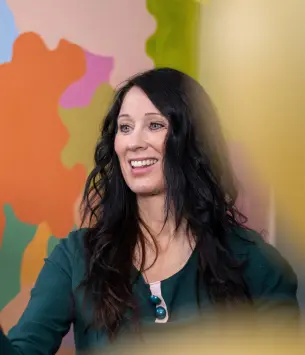 Anette Sofie Bernsen is defending her thesis for the degree philosophiae doctor (PhD) at the University of South-Eastern Norway.
The doctoral work has been carried out at the Faculty of Humanities, Sports and Educational Science.
You are invited to follow the trial lecture and the public defence.
Summary
What happens when the staff in early childhood education and care (ECEC) support children in planning, exploring, and creating?
A new doctoral thesis by Anette Sofie Bernsen explores co-creation between children and staff, where children are not only involved but actively contribute as co-creators of activities and plans in ECEC.
The study was conducted in five Norwegian ECEC-institutions and involved around 300 children and adults.
The Palette Model: A new tool for co-creation in ECEC
In her doctoral research, Bernsen developed the Palette Model, a new practical tool for the staff to support creative processes together with children. The model is already being used in several ECEC institutions to support children and staff in developing everything from everyday activities and projects to shaping the physical play environment – both indoors and outdoors.
Ensuring children’s participation in planning and evaluation can be challenging for the staff, even though it is required in the UN Convention on the Rights of the Child. Through the Palette Model, children are included as co-creators and are given real influence over the direction, content, and development of their everyday experiences.
When children and adults create, play, and explore together, relationships become more equal, and children gain greater influence. Co-creative processes make room for diverse forms of expression and foster a community characterized by play and creative exploration. Children’s positive responses also increased staff motivation and engagement, says Bernsen.
Making space for more creativity
Overly rigid routines in ECEC can limit children’s creative opportunities. The findings highlight the importance of moving from fixed routines toward more open and exploratory ways of working. When staff follow children’s initiatives and bodily expressions, children gain greater influence over the content and direction of activities.
The study shows that children not only participate but also create meaningful experiences for one another when staff support experimentation and mutual listening. The thesis provides new insights into how co-creative processes can contribute to more inclusive, motivating, creative, and equality in ECEC, with relevance for professional practice, education, and future research. It also highlights the need to strengthen aesthetic subjects such as drama, music, and art in ECEC and in early childhood teacher education.