 10.00
-
15.00
10.00
-
15.00
 Drammen, Auditorium A5508
Camilla Linderborg is defending her thesis for the degree philosophiae doctor (PhD) at the University of South-Eastern Norway.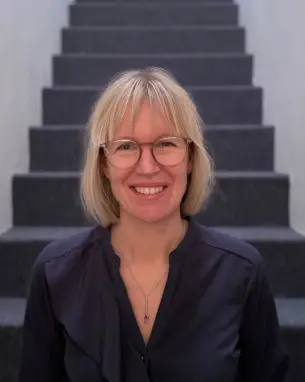
The doctoral work has been carried out at the Faculty of Health and Social Sciences.
You are invited to follow the trial lecture and the public defence.
Summary
Research findings now indicate that half of all families receiving child mental health services and one-third of those enrolled in adult mental health clinics suffer from multiple mental illnesses. Employees at two major mental health services in Sweden are aware of this situation, without being able to offer appropriate treatment resources between the structures.
In response, The Family Model was introduced in more than 500 such families. It resulted in most providers and patients being measurably assisted by such a family-focused approach at both mental health services.
Employees reported that The Family Model was useful for burdened families and assisted them in preventing crises. They welcomed the integration of the model in their practice.
Families found The Family Model gave them the opportunity to deal with their situation on their own. They praised the clear direction it gave them, but stressed the role of competent clinicians in its success.
Based on this outcome, mental health providers may be encouraged to apply The Family Model when treating families with multiple mental health issues.
Camilla Linderborg has a master’s degree in public health with a specialization in preventive science, and a bachelor’s degree of science in social work. She has worked in child and adult mental health services for many years, focusing on practice-based research into the mental health of children.