 10.00
-
15.30
10.00
-
15.30
 Porsgrunn, A-271

Thea Lucia Sauro Indrebø is defending her thesis for the degree philosophiae doctor (PhD) at the University of South-Eastern Norway.
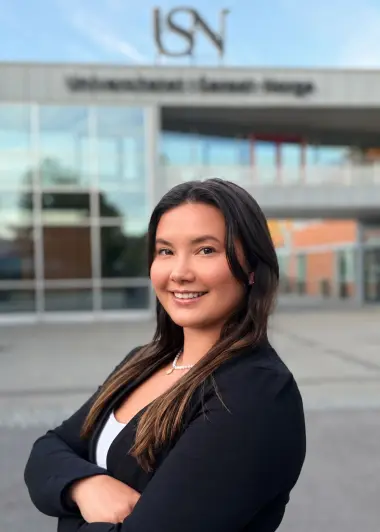 She has pursued the PhD program in Technology at the Faculty of Technology, Natural Sciences, and Maritime Sciences, Department of Process, Energy and Environmental Technology.
You are invited to follow the trial lecture and the public defence.
Summary
Sewage sludge, the heavy residue from wastewater treatment, is often treated as a waste problem. Thea Indrebø’s thesis shows that sewage sludge can instead help supply renewable energy and at the same time reveals important limits to how “green” this solution can be.
The study looks at a combined approach where sludge is first used to produce biogas, and the remaining material is then heated in the absence of oxygen (pyrolysis). This treatment produces gases and liquids that can be used for energy.
In her doctoral work, Thea Indrebø has investigated whether the aqueous phase of pyrolysis liquid, known as APL, can be fed back into the biogas process to increase methane production. The results show that this is technically feasible. In one of the systems studied, full integration of biogas process and pyrolysis was achieved without compromising process stability. In another system, APL was degraded and converted into methane, but the loading required for full integration exceeded what the system could tolerate within the timeframe of the study.
Her thesis further shows that the addition of APL affects the microbial environment responsible for biogas production. The process became more demanding, and ammonia was identified as an important inhibitory factor. At the same time, the microbial analyses showed signs of adaptation, indicating that APL may be used for increased energy recovery if operating conditions are adjusted and carefully controlled.
A key finding is that more energy does not automatically mean a better environmental outcome. A life cycle assessment showed that recycling APL improves climate performance thanks to higher methane production. But it also increases the risk to freshwater ecosystems, because of persistent pollutants such as PFAS and PAHs in the effluent stream.
Overall, the thesis concludes that pyrolysing the biogas residue without condensing the pyrolysis gas gives the best balance between energy recovery, climate benefits, and pollution control.
Thea Indrebø’s research provides new knowledge on how integrated treatment systems can enable safer and more resource-efficient management of sewage sludge. At the same time, it provides an important basis for the further development of waste-to-energy solutions in which both energy recovery and pollutant management must be assessed together.