 10.00
-
15.00
 Bø, Auditorium A.O. Vinje 6-103 and Zoom

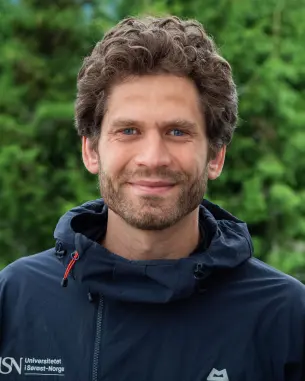 Cleng Andersen Eikje is defending his thesis for the degree philosophiae doctor (PhD) at the University of South-Eastern Norway.
He has pursued the PhD program in Culture studies at the Faculty of Humanities, Sports and Educational Science, Department of Sports, Physical Education and Outdoor Studies.
You are invited to follow the trial lecture and the public defence.
- Link to the thesis will come here
Summary
The environmental sustainability of friluftsliv has been challenged in recent decades, partly because of equipment consumption, travel, and impacts on nature. At the same time, friluftsliv is often portrayed as sustainable and as a way to increase environmental awareness. The dissertation shows that the perceived connection between friluftsliv and environmental awareness is a historically established idea that obscures tensions—both past and present—between the interests of friluftsliv and concerns for nature, the environment, and the climate.
The dissertation draws on written sources dating from the 1880s to the present. The sources are analysed using discourse theory and neo-institutional theory. The analysis shows that the idea that friluftsliv and environmental awareness naturally belong together gained considerable influence in Norway from the 1970s onwards, spreading through educational programmes, politics, and friluftsliv organisations. The dissertation asks whether portrayals of friluftsliv as traditional, natural, and environmentally friendly may have contributed to environmental challenges associated with friluftsliv receiving less attention.
The dissertation also offers a more nuanced account of the idea that friluftsliv and nature conservation have historically gone hand in hand. A study of nature conservation cases involving the Norwegian Trekking Association (DNT) and the Norwegian Association of Hunters and Anglers (NJFF) between 1880 and 1930 shows that the organisations’ positions were shaped by their own interests and those of their members. These interests did not necessarily align with nature conservation.
Finally, the dissertation examines how DNT responds to expectations that it should act more sustainably. The organisation often presents friluftsliv as inherently sustainable, while its measures to encourage more sustainable behaviour among members are limited and have little effect on DNT’s activities. As a result, these measures do little to address the underlying tension between members’ interests and sustainability concerns. The narrative of friluftsliv’s inherent sustainability helps make this ambivalence less visible.
The dissertation encourages a critical examination of how friluftsliv and sustainability are portrayed, and greater awareness of assumptions that are often taken for granted. The findings also suggest that tensions between friluftsliv and environmental concerns may be one of the enduring themes in the history of friluftsliv.