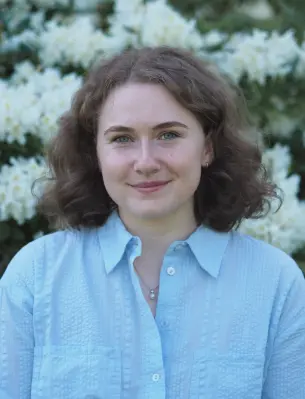
 Anna Molíková (ceitec.muni.cz) is a first‑year PhD student in bioinformatics at the Faculty of Medicine at Masaryk University.
- Industry relevance tags: AI, Bioinformatics, Biotech & health, Medical diagnostics
- Core research problem: How artificial intelligence and multimodal generative models can be integrated into cancer diagnosis and treatment to improve accuracy, personalization, and clinical decision-making
This project lies at the intersection of artificial intelligence, bioinformatics, and medicine.
“How can AI help doctors see cancer earlier, understand it better, and treat it more precisely?”
Anna Molíková, The Short Version
- LinkedIn: Anna Molíková | LinkedIn
- University Profile Page: Ing. Anna Molíková | Masaryk University
Anna Molíková has just started her PhD in bioinformatics at Masaryk University, where she aims to integrate AI‑driven intelligent agents and multimodal generative models into cancer diagnosis and treatment.
Although still at an early stage, she is motivated by the potential of biotechnology at the intersection of healthcare and technology.
She is eager to learn from others' PhD journeys while shaping her own research direction.
Continuous self‑improvement, sports, music, and folklore energize here beyond the lab.
Exploring AI for Cancer Diagnosis and Treatment
Anna's doctoral research focuses on integrating AI‑driven intelligent agents and multimodal generative models to enhance cancer diagnosis and treatment. Her interest sits firmly at the crossroads of technology and healthcare, where computational methods can support clinicians in making more informed, data-driven decisions.
Although she is still in the very early stages of her PhD journey, her project is motivated by a clear long‑term vision: leveraging bioinformatics and AI to improve diagnostics, personalize treatment, and ultimately contribute to better patient outcomes.
Exploratory Mindset
Having just started her PhD, Anna does not yet have concrete findings, but she sees this phase as an opportunity rather than a limitation. She is actively shaping her direction, learning to ask better questions, and building a strong conceptual foundation in both computational methods and biomedical research.
“Right now, I am learning how to ask the right questions, and that feels just as important as finding answers.”
This exploratory mindset defines how she approaches her work, with curiosity, openness, and a willingness to experiment across disciplines.
Curiosity Beyond the Lab
Outside her immediate research focus, Anna is broadly curious about biotechnology and the wider intersection of healthcare and technology. She is particularly interested in how bioinformatics can be applied not only in research, but also in real‑world diagnostics and personalized medicine.
Her interests reflect a desire to understand the full pipeline, from data generation and modeling to clinical relevance and patient impact.
Learning Through People and Mentorship
At this early career stage, the connections Anna values most are those rooted in mentoring and shared experience. She is keen to meet other PhD researchers, especially those working in bioinformatics or related fields, who can share honest insights about their journeys, challenges, and career paths.
Hearing how others navigated uncertainty, defined their research focus, and transitioned towards industry or academia is especially valuable to her as she begins to map her own trajectory.
Driven by Growth and Balance
Outside of work, Anna is motivated by continuous self-improvement and the desire to become a well-rounded person. She draws energy from seeing her own progress, whether that comes from maintaining a healthy lifestyle, practicing sports, or developing creative and cultural interests.
She enjoys playing the guitar and exploring folklore, activities that provide balance, creativity, and a sense of connection beyond science.
Looking Ahead
For her future career, Anna aims to become more independent in her thinking and to strengthen her ability to think outside the box. She wants to improve how she sets goals, reflects on her progress, and deliberately shapes her development as a researcher and professional.
“I want to grow into someone who can think independently, ask meaningful questions, and use technology to make a real difference in healthcare.”