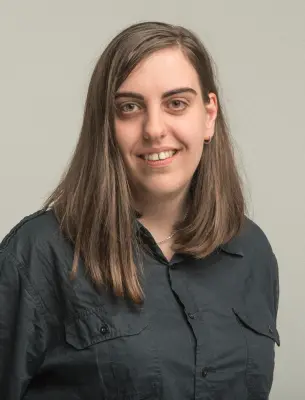
 Dóra Márföldi is a PhD candidate in architecture at the Marcell Breuer Doctoral School of Architecture in Pécs, Hungary, working at the intersection of craft, design, materials science, and biotechnology.
Her research investigates the interior architectural potential of mycelium-based composite materials as sustainable alternatives to conventional insulation products.
- Industry relevance tags: Sustainable construction, Bio-based materials, Circular design
- Core research problem: How mycelium-based composite materials can replace fossil-based insulation materials in interior architecture while reducing environmental impact and enabling circular material systems.
“What if design worked with living systems instead of extracting from them?”
Dóra Márföldi, The Short Version
- LinkedIn: Dóra Márföldi
- Institution: University of Pécs
- Location: Pécs, Hungary
- Background: Textile design, biodesign
Dóra Márföldi is a PhD researcher, designer, and educator focusing on mycelium-based composite materials for interior architecture.
Her work combines craft, design, biotechnology, and materials science to develop fully biodegradable insulation and architectural components.
She is the co-founder of Szimbio Lab, a design studio and educational initiative centered on bio-based materials and ecological literacy.
Nature is her primary source of inspiration.
Growing Materials for Architecture
Dóra’s doctoral research explores how mycelium, the vegetative root network of fungi, can be cultivated into lightweight, porous composite materials for interior architecture.
By acting as a natural bio-binder for agricultural waste such as straw or hemp shives, mycelium forms composites with competitive thermal and acoustic insulation properties, while remaining fully compostable.
Design Freedom Through Biology
A unique feature of mycelium-based materials is their growth behavior. Rather than being manufactured through extractive, energy-intensive processes, these materials are cultivated and can grow into almost any shape.
This opens up wide possibilities for modular design, customization, and new architectural expressions, in co-creation with living systems.
Learning to Work at Nature’s Pace
One of the biggest challenges of Dóra’s PhD was adapting to a biotechnological research environment. Working with living organisms fundamentally changed how she thinks about time, control, and iteration.
The growth cycle of mycelium leads the design process, requiring patience, observation, and trust in the material.
This experience reshaped her understanding of research, learning, and creativity.
Bridging Design and Science
Dóra is deeply passionate about interdisciplinary collaboration. She sees the ability to create a shared language between designers, engineers, and scientists as one of the key challenges and opportunities of sustainable innovation.
Her work actively nurtures dialogue between craft, design practice, materials science, and the natural sciences.
From Research to Real-World Application
Alongside her PhD, Dóra works as a green packaging expert in the EU-funded Circsyst Horizon project, where she tests mycelium composites for sustainable packaging applications.
She is also co-developing and validating prototypes, moving her research closer to real-life contexts and potential market entry.
Building a Symbiotic Future
After completing her doctorate, Dóra aims to bring mycelium-based products to market and expand her work in sustainable design education.
Through Szimbio Lab, she already organizes workshops on bio-based materials, ecological literacy, and sustainability-oriented design thinking.
She hopes this network will support her growth in pitching, strategic thinking, business planning, storytelling, and building pilot projects with construction industry partners.
“Sustainable design is not just about new materials, it is about changing how we relate to the living world.”