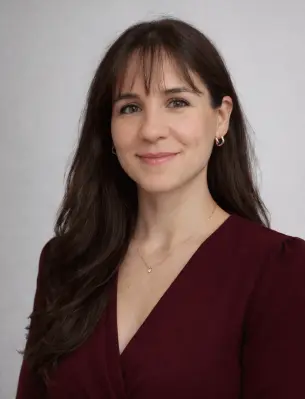
 Francesca Chiara Serri (LinkedIn) is a second‑year PhD researcher in Economics and Business Administration at the University of Cagliari, currently based in Tromsø, Norway, for a research stay.
Her research examines nomadism as an organizational principle, exploring how mobility, fluidity, and process‑based structures can foster resilience in times of uncertainty.
- Industry relevance tags: Organizational design, Innovation management, Business resilience
- Core research problem: How alternative, non-hierarchical organizational forms based on mobility and fluidity can enhance resilience in uncertain and rapidly changing environments.
“Stability is often treated as the foundation of resilience, but my work suggests that adaptability and movement may matter more.”
Francesca Chiara Serri, The Short Version
- LinkedIn: Francesca Chiara Serri | LinkedIn
- University: University of Cagliari
- Current base: Tromsø, Norway
Francesca Chiara Serri is a PhD researcher in organizational and management studies, focusing on alternative organizational forms and plural leadership.
Her work challenges traditional assumptions about hierarchy and stability by examining nomadism, mobility, and collective leadership as sources of organizational resilience.
Currently based in Norway for a research stay, she is deeply influenced by Scandinavian approaches to work, well‑being, and balance.
Outside academia, she reflects on how organizational theory translates into lived experience, especially in different cultural contexts.
Rethinking How Organizations Endure
Francesca’s doctoral research explores how organizations can remain resilient in uncertain environments without relying on rigid structures. By treating nomadism not as a metaphor but as an organizing principle, she investigates how fluid roles, mobility, and ongoing processes shape collective coordination.
Her work challenges mainstream organizational theory by questioning the assumption that stability and fixed hierarchies are necessary for long‑term resilience.
Instead, she suggests that adaptability, openness, and movement may offer stronger foundations for navigating uncertainty.
Conceptual Clarity in a Fragmented Field
With a background in organizational and management studies, Francesca works in a field marked by conceptual overlap and ambiguity. One of the main challenges of her PhD has been navigating inconsistently defined ideas around leadership, resilience, and alternative organizing.
This experience has shaped her approach, pushing her toward greater conceptual precision, reflexivity, and rigor in how she frames and develops theory.
Living the Theory in Norway
Her research stay in Tromsø has had a profound impact on both her work and mindset. Experiencing a culture where well‑being, rest, and balance are collectively prioritized has reshaped how she understands resilience.
Rather than remaining abstract concepts, flexibility and adaptation have become lived experiences that now directly inform her theoretical perspective.
She describes this period as the most qualitatively productive phase of her doctoral journey.
Curiosity Beyond Academia
Beyond theory, Francesca is deeply curious about how organizations actually operate in practice, particularly in deep tech, sustainable industry, and knowledge‑intensive services. She is especially interested in the Norwegian and Scandinavian context, and how firms there build adaptive capacity.
She is keen to see whether real organizational practices confirm or challenge her conceptual models.
Thinking Toward Practice and Future Paths
Looking ahead, Francesca is actively considering how her research could translate beyond academia, including paths into consulting, organizational design, or entrepreneurship.
She wants to strengthen her ability to communicate complex ideas to non‑academic audiences, build a clear professional narrative, and identify where her work on organizational resilience has tangible real‑world traction.
“I want my research to help organizations experiment with new ways of working, not just describe them.”