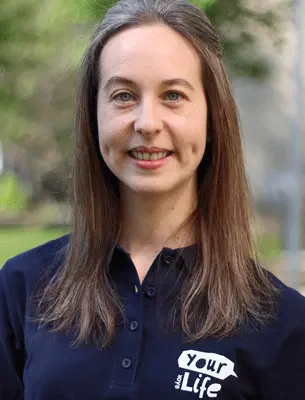
 Laura Németh (LinkedIn) is a PhD candidate in Health Sciences at the Doctoral School of Health Sciences in Pécs, Hungary, with a background in food science, nutrition, and dietetics.
Her research explores the functional and sensory potential of cricket powder as an egg alternative in sponge cakes, with the broader aim of supporting sustainable food innovation based on alternative protein sources.
- Industry relevance tags: Food innovation, Sustainable food systems, Alternative proteins
- Core research problem: How insect-based ingredients such as cricket powder can replace conventional animal products like eggs while maintaining consumer acceptance and functional food quality.
“Sustainability only works when people actually enjoy the food.”
Laura Németh, The Short Version
- LinkedIn: Laura Németh
- University: University of Pécs
- Doctoral school: Doctoral School of Health Sciences
- Location: Pécs, Hungary
Laura Németh is a PhD researcher in food science and a registered dietitian, working on the development of sustainable food products using insect-based proteins.
Her doctoral research focuses on optimizing cricket powder as an egg substitute in bakery products, balancing technological performance with consumer acceptance.
Alongside academia, she has extensive experience in food quality assurance, R&D, and consulting for health-tech and supplement companies.
Outdoor sports, social activities, and meeting new people energize her beyond work.
Designing Sustainable Food People Want to Eat
Laura’s PhD research investigates whether cricket powder can function as a viable egg alternative in sponge cakes. Using optimization models, she develops formulations that preserve key technological properties such as texture, structure, and stability, while also meeting sensory expectations.
The broader objective of her work is to support the development of innovative, sustainable food products that consumers are actually willing to adopt.
By focusing on both functionality and acceptability, her research tackles one of the biggest barriers to alternative proteins.
From Laboratory to Industry
Her current research is supported by the EKÖP-KDP-25 (Excellence Scholarship Program – Cooperative Doctoral Program) of the Ministry for Culture and Innovation in Hungary.
As part of her PhD, Laura collaborates closely with a Hungarian company that farms crickets and supplies the raw material for her experiments. Together, they explore how insect-based ingredients perform across different food matrices and where real application potential exists.
Although the work is still at an experimental stage, this industry collaboration anchors her research firmly in practical realities and future commercialization pathways.
Sensory Science as a Bridge to Behavior Change
Laura is deeply passionate about closing the gap between nutritional knowledge and actual dietary behavior. She sees sensory science as a crucial tool for understanding how taste, texture, and pleasure drive food choices.
Her long-term vision is to use sensory insights to make healthy and sustainable eating feel effortless rather than restrictive.
Entrepreneurial Experience and Independence
Before and alongside her PhD, Laura co-founded a sensory science startup offering consumer testing services to food businesses. While the venture did not fully scale, it gave her first-hand experience with entrepreneurship, client acquisition, and translating science into services.
She currently applies this experience as a consultant for health-tech and supplement companies, supporting product development and ingredient innovation.
Shaped by Self-Reliance
One defining challenge of Laura’s doctoral journey was navigating a period of high academic independence with limited traditional mentorship. What initially felt like an obstacle ultimately became a strength.
She developed a strong self-starter mindset, proactively building networks, seeking feedback, and taking full ownership of her research direction.
Looking Ahead
Laura wants to further strengthen her entrepreneurial skills, particularly in pitching ideas, marketing strategy, and evaluating commercial potential.
Through TESE Days and this network, she hopes to learn how to scale research-driven projects, improve client acquisition strategies, and build a more sustainable consulting and innovation practice in the food sector.
“My goal is to turn scientific insight into products and services that make better choices the easy choice.”