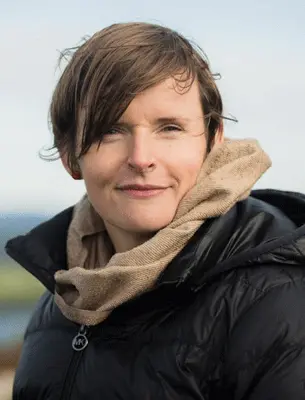
 Michelle Collins (usn.no) is a PhD researcher in cultural studies at the University of South‑Eastern Norway.
Her research explores how traditional mourning practices, particularly the Irish vocal tradition of keening, are being reinterpreted in contemporary ritual contexts.
- Industry relevance tags: Arts & wellbeing, Mental health, Community innovation
- Core research problem: How sound-based ritual practices, such as contemporary forms of keening, shape shared experiences of grief through sound, space, and ritual.
“How sound, environment, and ritual shape the way grief is felt, shared, and expressed collectively.”
Michelle Collins, The Short Version
- University: University of South‑Eastern Norway
Michelle Collins is a PhD researcher in cultural studies examining contemporary reinterpretations of keening, a traditional Irish mourning practice.
Her work focuses on sound, affect, ritual, and the material and environmental conditions that shape collective experiences of grief and wellbeing.
Alongside her academic work, she is actively involved in community arts and runs a small arts and wellbeing festival.
Creating spaces for shared creative practice, social connection, and care energizes her beyond research.
Recollecting Keening in Contemporary Practice
Michelle’s doctoral research, titled Recollecting keening: sound, affect and relation in contemporary ritualised practices, examines how keening is being reimagined today beyond its historical and cultural contexts.
Her work investigates how sound, spatial settings, and material conditions shape emotional expression and collective experiences of grief.
Through the analysis of contemporary ritual practices, and through her own embodied practice, she explores how sound-based forms of expression can support collective experiences of grief, social connection, and wellbeing.
Sound, Ritual, and Collective Experience
A key insight from Michelle’s research is that emotional expression does not emerge solely from the individual voice.
Instead, keening takes shape through relations between bodies, materials, environments, and ritual conditions. Elements such as the presence of the dead, spatial arrangements, and material surroundings actively influence how sound is produced and how affect circulates.
“Emotion is not something that simply comes from within, it is produced collectively, through specific configurations of people, things, and environments.”
This perspective reframes ritualised expressions of grief as relational processes rather than purely internal states.
Arts, Wellbeing, and Community Care
Beyond academia, Michelle is deeply interested in the intersection of traditional arts, wellbeing, mental health, and community care. She is particularly drawn to interdisciplinary approaches that examine how sensory experience, sound, and ritual shape social connection.
She is keen to connect with researchers and practitioners working in health, wellbeing, design, and community engagement, especially those exploring how embodied and environmental practices influence emotional experience in contexts such as healthcare, therapy, and participatory arts.
Grounded in Community Arts Practice
Outside her research, Michelle is energized by community arts. She volunteers at festivals and runs a small arts and wellbeing festival called Resonate, which collaborates closely with local organisations including hospitals, mental health services, and family resource centres.
This work keeps her research grounded in lived experience and social relevance. Creating spaces where people can slow down, connect, and share through creative practice is central to both her academic and community work.
Looking Ahead
Michelle sees her future work sitting between research and community practice, particularly within arts and wellbeing contexts.
To move in this direction, she aims to strengthen skills in project design and management, cross‑sector collaboration with health and community organisations, and translating research into accessible formats for non‑academic audiences.
“I want research to live beyond the university, in spaces where people actually meet, listen, and care for one another.”