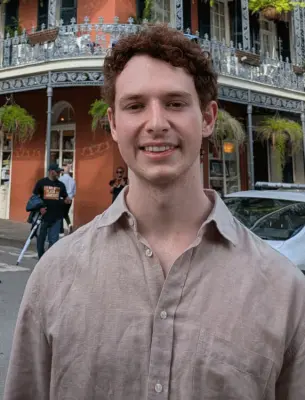
 Noam Bires (LinkedIn) is a first‑year PhD researcher in Computer Science at the University of Rennes, based in Rennes, France.
His research focuses on the reliability of AI models, especially how they behave when exposed to material and hardware faults.
- Industry relevance tags: AI reliability, Hardware–software systems, Safety-critical systems
- Core research problem: How AI models behave under hardware faults and how their robustness can be systematically tested and improved for deployment in critical applications.
“AI models are often more robust than we expect, but proving that reliability is far from trivial.”
Noam Bires, The Short Version
- LinkedIn: Noam Bires | LinkedIn
- Institution: University of Rennes, INRIA
- Location: Rennes, France
Noam Bires is a first‑year PhD student in computer science, studying how AI systems behave under hardware and material faults.
With a background in electrical engineering and research experience in both Europe and the US, he brings a strong systems‑level perspective to AI reliability.
He is broadly curious about how AI intersects with physics, mathematics, and biology.
Outside research, competitive swimming and sports are central to his life.
Testing AI Beyond Ideal Conditions
Noam’s doctoral research examines how artificial intelligence models behave when the underlying hardware is imperfect. Instead of assuming ideal execution environments, his work asks what happens when faults, noise, or material degradation enter the system.
A key insight from his work so far is that many AI models show a surprising degree of inherent robustness. However, demonstrating this reliability requires extensive testing, large computational resources, and carefully designed evaluation strategies.
From Electrical Engineering to AI Reliability
Holding a master’s degree in electrical engineering, with studies in Lyon and Chicago, Noam naturally approaches AI through the lens of hardware, physics, and systems. His previous research experience in Chicago confirmed his enjoyment of the freedom and creativity of research, which ultimately motivated him to pursue a PhD.
What has shaped his mindset most is learning not to force ideas. Rather than chasing results, he allows concepts to mature through reflection and exploration.
Curiosity Across Disciplines and Industries
Beyond his core topic, Noam is interested in how AI connects with fundamental sciences such as physics, mathematics, and biology. On the industry side, he is drawn to science‑driven sectors like automotive, space, and advanced technology.
People, Exchange, and Europe
Noam values networking as a way to exchange perspectives and ideas across cultures. He is particularly interested in building stronger connections within Europe, which he sees as rich in scientific and collaborative opportunities.
Through this network, he hopes to meet people who may become future collaborators, or simply friends with whom meaningful discussions can unfold.
Energy Beyond the Lab
Outside of research, sport plays a defining role in Noam’s life. As a competitive swimmer, he thrives on discipline, endurance, and balance. Cooking and enjoying good food are also important ways for him to recharge.
Looking Ahead
Noam wants to strengthen his communication skills, especially speaking clearly and confidently in front of an audience.
“Understanding AI is important, but being able to explain it well is just as essential.”