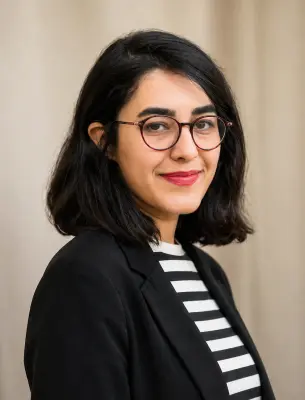
 Parisa Endallah (LinkedIn) is a first‑year PhD student at the University of Cagliari, working in Earth and Environmental Sciences and Technologies.
Her research focuses on phytomining and sustainable metal recovery, with the aim of integrating biological uptake and hydrometallurgical processing into a single phyto‑to‑metal pipeline.
- Industry relevance tags: Sustainability, Circular economy, Materials recovery, Green technology
- Core research problem: How critical raw materials can be sustainably recovered from low-grade or contaminated sources by integrating phytomining with hydrometallurgical processes.
“What if we stopped separating biology and metallurgy, and designed metal recovery as one continuous, sustainable system?”
Parisa Endallah, The Short Version
- LinkedIn: Parisa Endallah
- Location: Cagliari, Italy
Parisa Endallah is a first‑year PhD researcher in environmental sciences at the University of Cagliari, working on phytomining and sustainable metal recovery.
With a background in chemical engineering and biotechnology and several years of industrial experience in the pharmaceutical sector, she brings a strong process‑oriented mindset to environmental research.
Her work explores how plant‑based metal uptake and downstream hydrometallurgical recovery can be integrated into scalable solutions for critical raw materials.
Nature, sustainability, and interdisciplinary learning motivate her both professionally and personally.
From Plants to Metals
Parisa’s doctoral research addresses a central challenge in sustainable resource management: how to recover valuable metals from low‑grade or contaminated sources in an environmentally responsible way.
Her key insight is that phytomining and metallurgical recovery should not be treated as separate domains. By designing an integrated phyto‑to‑metal pipeline, her work points toward more practical and scalable recovery of critical raw materials from sources such as mine tailings.
Engineering Meets Biology
Her path into research was shaped by a desire to move beyond routine industrial work and engage in deeper problem‑solving. Coming from chemical engineering and biotechnology, she was initially surprised by the uncertainty of academic research.
Over time, she has come to value this openness, seeing it as an opportunity for creativity and interdisciplinary thinking.
Learning From Complexity
One defining challenge in her PhD has been experimental variability in biological systems. Working with plants in contaminated soils requires adaptive thinking, rigorous experimental design, and careful interpretation of noisy data.
This experience has strengthened her analytical mindset and her ability to integrate chemistry, environmental science, and data‑driven reasoning.
Looking Toward Real‑World Impact
Parisa is particularly interested in bridging laboratory research and industrial implementation. She hopes to connect with researchers and companies working in hydrometallurgy, environmental engineering, and green process design.
Her long‑term goal is to help turn sustainable metal recovery into viable industrial practice.