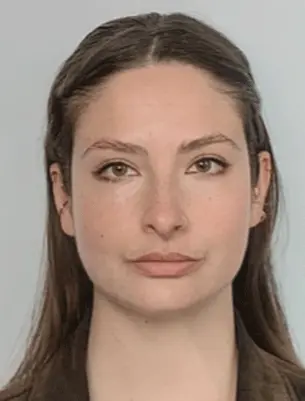
 Pauline Coeuret (LinkedIn) is a final‑year PhD researcher in Romance Studies at Université Paris Nanterre, based in Paris, France.
Her doctoral work examines how femicide is represented, aestheticized, and politicized in Mexican films and television from 1993 to 2023.
- Industry relevance tags: Media ethics, Gender equality, Cultural policy, Sustainability & society
- Core research problem: How femicide is represented in Mexican film and television, and how audiovisual narratives shape public understanding of gender-based violence and its structural social causes.
"How does audiovisual fiction shape the way societies understand gender-based violence?"
Pauline Coeuret, The Short Version
- LinkedIn: Pauline Coeuret
- Academic Profile: Pauline Couret | Institut des Amériques
- University: Université Paris Nanterre
- Location: Paris, France
Pauline Coeuret is a PhD researcher in cinema and gender studies focusing on representations of femicide in Mexican audiovisual productions.
Her work combines narrative, aesthetic, and reception analysis across film, television series, and soap operas.
She is interested in public policy, NGOs, consulting, and ethics of representation.
Women's rights activism, photography, dance, and community‑based cultural projects energize here outside academia.
Representing Femicide on Screen
Pauline's doctoral research analyzes thirty Mexican films and television productions depicting femicide over a thirty‑year period. Her work combines narrative analysis, aesthetic study, and audience reception research using both qualitative and quantitative data.
Contrary to her initial hypothesis, visual representations of femicide have not steadily decreased over time. Instead, she identifies a complex trajectory shaped by political context and feminist movements.
Violence, Aesthetics, and Political Meaning
Pauline's findings show that while productions between 2010 and 2016 tended to suggest violence off‑screen, works from 2017 to 2023 reintroduced explicit imagery. However, these representations are framed differently.
"Graphic violence is no longer used to aestheticize suffering, but to expose the structures that make femicide possible."
Drawing on Slavoj Žižek's concepts of subjective and objective violence, Pauline demonstrates how recent works highlight structural, social, and economic conditions that protect perpetrators and normalize gender‑based murder.
From Academia to Policy and Practice
Pauline is keen to work with public institutions, policymakers, NGOs, and international organizations such as UNESCO or UN Women. She is also interested in advising private industries on ethics of representation, intersectionality, and gender-based violence.
She hopes to further develop her entrepreneurial mindset, pitching skills, and ability to translate academic research into policy-relevant insights.
Activism, Art, and Community
Outside her PhD, Pauline is deeply engaged in feminist activism. She documents marches and protests through photography and video, creating visual archives of ephemeral political moments.
Dance, sport, and involvement in cultural associations give her a strong sense of community and creative expression.