
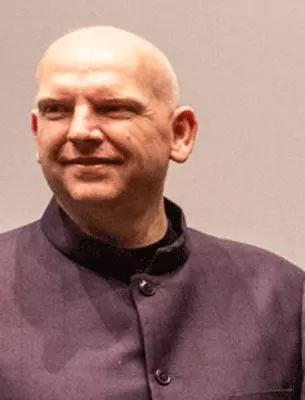
 – It is important that everyone at USN can use AI. It will shape everything we do, says professor Olaf Hallan Graven at the Department of Industrial Economics, Strategy and Systems, who is also the leader of the university’s AI council.
USN’s work on artificial intelligence is collected on dedicated web pages that provide a comprehensive overview of policy documents, guidance, tools and support for the responsible use of AI in education, research and administration.
Visit USN’s AI pages for a complete overview: Artificial Intelligence - University of South-Eastern Norway
AI in the alliance
The article you are now reading follows up an initiative from our Hungarian partner, the University of Pécs (PTE), to share practices in AI across and beyond our alliance.
READ ALSO: How Does the University in Pécs Manage Artificial Intelligence (educalliance.eu)
– We see the greatest added value of the EDUC alliance as a joint European arena to develop a responsible, critical and future-oriented use of AI in higher education, says Graven.
For USN this is particularly valuable as it builds on established forms of cooperation from the VINST alliance (hvl.no), where USN collaborates with three other Norwegian multi-campus institutions on education, research and regional development.
– The experiences from VINST show that structured collaboration between institutions creates real value, not only through idea exchange but through practical cooperation, mutual learning and shared competence building, says Graven.
USN’s European university alliance EDUC – European Digital UniverCity gives USN the opportunity to further develop this work in a broader European context.
– Through the EDUC alliance we can develop common approaches to AI in education, research and administration, in a European context while learning from different national, regulatory and institutional frameworks, says Graven.
AI Council
The Council for Artificial Intelligence (AI Council) at USN was established in 2024 as an important measure to strengthen a more coordinated approach to AI. The council’s mandate is to provide professional advice on priorities and responsible use of AI in research and education, while also contributing to ethically sound and socially responsible use across disciplines.
The council also acts as a driving force in the development of USN's AI policy and provides advice on new tools and guidelines. The council held its first meeting early in 2025 and consists of five academic members with expertise in AI-related fields from all faculties, as well as three representatives from central administration.
The members contribute their expertise and do not represent their respective units.
Guidelines
Policy for the use of artificial intelligence at USN (.pdf) was developed by the AI Council on assignment from the rectorate and approved by the university board on 17 June 2025. These guidelines are now being implemented and will be regularly evaluated and revised to keep pace with technological developments and changes in regulations.
The aim of the policy document is to facilitate the use of AI in education, research and administration, while safeguarding academic integrity, privacy, information security and ethical responsibility.
The ethical principles are integrated into the policy document and reflect several of the principles from the so-called Living guidelines on the responsible use of generative AI in research (europeanheritagehub.eu).
The foreword in USN’s AI policy states:
“Artificial intelligence (AI) is one of the most pervasive and transformative technologies of our time. USN will meet the development with academic strength and social responsibility, working to ensure that responsible development and use of AI can strengthen knowledge, learning and societal development.”
– The guidelines highlight the technology’s potential but emphasise that it must be used critically, transparently and under human control. They also point to a broader ambition: to build AI competence among staff and students, integrate relevant AI knowledge in study programmes, support responsible use in research and ensure that use in administration occurs under human control, not through uncritical automation, says Graven.
In addition, USN has developed its own guidelines for use during exams and student assignments, as well as a resource page for educators on the use of AI in education: Learning, teaching and assessment with AI – edu.usn.no
Involvement of employees
Since 2024, USN has had an open AI network (AI forum) for all employees. This is an informal and accessible arena for sharing experiences, organised as a dedicated area in Microsoft Teams. Here, employees can share experiences, ask questions and discuss AI in teaching, learning, assessment, research, administration and digital tools.
As of April 2026, the forum is approaching 600 members.
A cross-administrative working group with representatives from various administrative units has also been established. In addition to facilitating the AI forum, the group is responsible for coordinating AI activities across the organisation and supporting the introduction of AI in administration. Monthly, the group organises open webinars on various topics where educators and researchers share experiences with using AI. These events are well attended, and recordings are made available to all employees via the AI forum.
Learning and training
In January 2026, USN launched “AI in studies”, an interdisciplinary learning resource about responsible use of AI. It is available to both students and employees via the Canvas LMS learning platform, in both Norwegian and English.
The resource was developed on assignment from the pro-rector for education, through a co-creation process led by the unit for digitalisation and educational quality (eDU) at USN. Over 20 contributors participated, including the university library, the AI Council, USN Academic Writing Centre, communications department, eDU’s media team, the university’s legal services and the student organisation.
The resource consists of three mandatory modules with quizzes covering basic AI understanding, tools and data security, as well as responsible use in academic work. Additionally, there are three supplementary modules on academic writing, frequently asked questions and subject-specific advice for educators.
Each study programme also has responsibility for providing students with training in responsible use of AI.
There are also several courses, particularly in technology subjects, that address the use of various types of AI technology. Within computer science and software development, there are courses at bachelor’s and master’s level on how AI works and how such systems are developed.
Education and integration
USN works to balance the use of AI in teaching with respect to academic integrity and plagiarism issues. This is done through a combination of access to tools, clear guidance and clear expectations for responsible use. Several tools are made available to all students, including Microsoft Copilot, Sikt AI chat, Keenious and various transcription tools. These are considered safer alternatives than many open consumer services, both because they provide better institutional control and because they facilitate open discussion about use in an educational context.
– By addressing the use of AI directly with students, we want to develop critical judgement, openness and responsible academic practice, instead of treating AI as something that should simply be banned or ignored, says AI Council leader Graven.
At the same time, he emphasises that AI presents real challenges:
– It is still a challenge to clearly distinguish between legitimate support and unacceptable replacement of the student’s own work, and to ensure that assessment methods still test relevant knowledge, skills and independent thinking.
Strengthening AI competence
The work on AI competence is carried out not only through formal guidelines but also through continuous communication and dialogue across the university. Members of the AI Council contribute actively, both through their work on the council and through their professional roles in the organisation. They raise issues related to AI, give presentations, share experiences and discuss responsible and practical use in meetings, seminars and workshops with administrative and technical-administrative staff, including in communication, admissions and other support functions.
The same approach is also widely used in academic environments and in activities aimed at students. The goal is for the development of AI competence to be an integrated part of the university’s daily operations, and not a standalone initiative.
USN offers a range of resources and activities to support the use of AI in education. This includes a dedicated resource page for staff and students about AI in teaching, learning and assessment, as well as an AI module in the university pedagogy programme. Additionally, there are intranet articles on AI and assessment, exam regulations and related topics, as well as a series of online webinars on the use of AI tools in teaching, learning, assessment and research. Workshops for staff in several study programmes have also been conducted to support practical use of AI in teaching and assessment.
– Despite many training initiatives, USN still lacks a complete overview of all activities, such as what has been carried out in various units and what competence needs will be important going forward. Therefore, both the AI Council and the cross-administrative working group regularly discuss what AI competencies are needed and how learning can best be facilitated, both for early adopters and for those more reluctant, says Magnus Skytterholm Egan on behalf of the working group.
AI on web pages
The university library has developed a portal called the Sustainability Portal (pilot testing phase). The tool makes it possible to link researchers’ publications to the UN’s Sustainable Development Goals. Publications are retrieved from the national research information system Cristin, classified using AI, and users can themselves adjust how strongly a publication is associated with the various goals.
This will be useful not only for USN but also for other universities, larger research projects and journalists or others who want an overview of what USN has published in areas such as equality, clean energy and climate.
USN also uses AI to improve both web search and editorial workflows.
The search function on usn.no is under development and will eventually be able to provide users with an AI-generated summary at the top of search results.
– This will make it easier to find quick and relevant answers, especially when searching for specific information, says Sveinung Grande, head of the web editorial team in the communications department at USN.
At the same time, users will be made aware that AI-generated answers may contain errors and should be used as a supplement to other content on the website.
In addition, an AI assistant is integrated in the publishing tool used to create and manage web content. It helps editors write, improve and translate text, but requires conscious use and editorial judgement to ensure quality.
– Overall, this contributes to a better user experience and more efficient workflows, while emphasising the importance of editorial control and quality, says Grande.
Reaching out to society
USN actively works to increase knowledge about AI in society, both regarding opportunities and challenges. This happens through participation in public debate, professional dialogue and cooperation in arenas where academia, business, public sector and society meet.
– Our goal is not only to show what AI can be used for, but also to raise awareness about challenges related to ethics, privacy, transparency, biases, security and responsible use, says Graven on behalf of USN’s AI Council.
USN contributes through lectures, debates and communication activities at national and regional arenas such as Kongsberg Agenda and Arendal Week, where academic environments participate in discussions about AI, industrial development, sustainability, education and social development.
In addition, USN organises and participates in numerous workshops and meetings, both completed and planned, in collaboration with business, public sector and other actors. Here, experiences and knowledge are shared, and a more nuanced understanding of how AI can be responsibly used in various parts of society is facilitated.
This activity is also closely linked to research and academic development at USN in areas where AI plays an increasingly important role, such as industry, health, energy, cybersecurity, autonomous systems, remote laboratories and digital transformation.
– Through research, communication and collaboration with external partners, we aim to contribute to a broader and more balanced understanding of AI in society, says Graven.