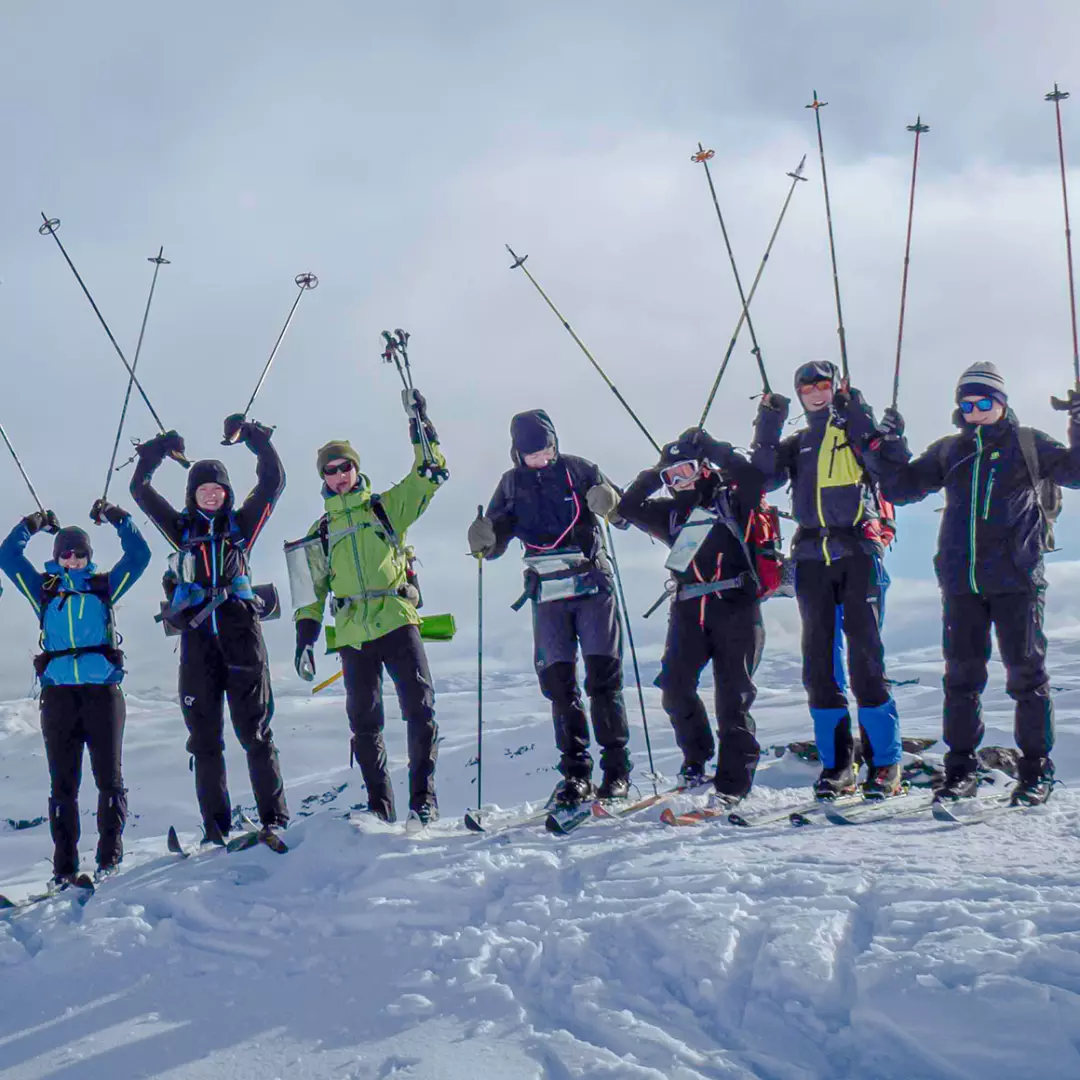
Nordic Backcountry Skiing and Outdoor Leadership Exchange programme
Friluftsliv (Norwegian outdoor life) plays a central role in Norwegian culture. If you want to experience friluftsliv in winter and spring, this program is perfect for you. You will learn backcountry and cross-country skiing, winter camping and sea kayaking.
Study facts
-
Campus: Bø -
Study level: Exchange programmes, bachelor level -
Progression of study: Full time -
Start up: Spring 2027 -
Teaching model: Campus -
Credits: 30 -
Charge: No tuition fee. -
Closing dates: 15.10.2026 -
Semesters: 1 -
Teaching Language: English


Why study Nordic Backcountry Skiing and Outdoor Leadership?
Through a combination of winter and spring excursions in nature and theoretical lectures, students will gain the practical and theoretical knowledge required for nature guiding, and outdoor leadership. Students will undertake extended expeditions in winter forests and mountains and go sea kayaking in the archipelago of Southern Norway during spring.
The program includes approximately 25 days on expeditions and several day excursions. Students will spend nights in tents, under tarps, in mountain huts, and under the open sky.
What you will learn
The program consists of several courses and awards a total of 30 ECTS credits. Students will explore the history and cultural traditions of Norwegian backcountry skiing (friluftsliv). Throughout the semester, approximately 40 teaching days will be spent outdoors, with a variety of activities in focus.
The main topics are:
- backcountry skiing
- winter camping
- Nordic/cross-country skiing
- cultural excursions
- sea kayaking.
The program seamlessly combines theory and practice. Teaching methods include direct instruction, guided tours, and experiential learning. This approach gives students both the theoretical foundation and practical skills needed to plan and lead trips safely, according to participants’ abilities and prevailing winter conditions. Upon completion, students will be qualified to lead small groups on ski tours in relatively easy winter terrain, including overnight trips.
Why study at USN
University of South-Eastern Norway, campus Bø, is located with spectacular nature all around. The student environment is excellent and the small size of USN allows for a close contact between students and professors.
Further study opportunities
Students who would like to do a full year study can combine this study with Outdoor Life, Culture and Ecophilosophy, which is available in the autumn semester.
Study Plan and Course Plans
A study plan describes the content, structure and organization of a study programme. To each study plan there is a set of course plans that describe the different courses. In the course plan you will also find a reading list. Below you will find a study model that shows you which courses that are taught in each term. In the study model you'll also find links to each course plan.
Latest published study planStudy model
Admission requirements
The programme is open to international exchange students studying at one of USN's bilateral partner institutions. Exchange students at the bachelor-level must have completed at least 60 ECTS or equivalent within the relevant study field, and be officially nominated by their home university in order to apply. Admission to the programme requires a good command of the English language, both spoken and written. An English proficiency equivalent to B2 (Cambridge) level is recommended.
This program is designed for international exchange students with a minimum of one year of higher education in sport science or equivalent studies. The student must be physically fit, have some skiing experience and be able to swim for the sea kayaking. Application is through the partner institution.
In addition to the required documents, all applicants to this program should upload a letter of motivation explaining the interest in the programme and also highlight other outdoor experience not covered in the academic transcripts. This should be approximately one page in length.
The students are expected to bring/get their own personal equipment for the excursions (sleeping bag, backcountry skis, ski boots, backpack, clothing etc. – a more thorough equipment list will be provided when a student signs up for the course). The student should expect some extra expenses for equipment, transportation, excursions and overnight stays at huts.


