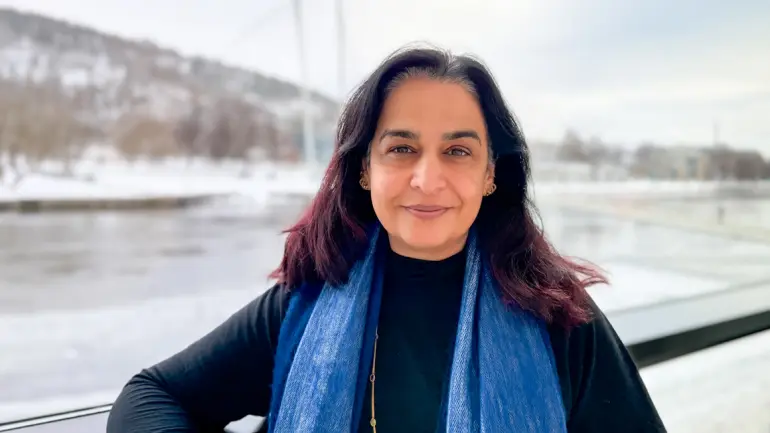
Baily’s project was first approved in the US and forwarded to Fulbright Norway for the final academic and practical clarifications.
But after Donald Trump’s election victory, all Fulbright projects were temporarily put on hold and then politically screened.
Several media outlets have documented that projects on topics like diversity, equality, and climate were stopped as politically “undesirable” by the new administration.
Norway stepped in – saved the projects
To protect academic freedom and avoid political censorship of research fields Norway considers important, the Norwegian authorities decided to pick up the bill for the halted grants.
Baily received a letter from the Norwegian Fulbright office in Oslo. The letter prepared her for a rejection from US authorities, but at the same time informed her that the Norwegian government would pay for her stay at the University of South-Eastern Norway.
“So now I’m here as a guest of the Norwegian government. I’ll always be grateful that Norway was willing to spend money on me and my research”, says Supriya Baily with a big smile when we meet her at USN’s campus in Drammen.
The classroom - the front line of democracy
Supriya Baily is an activist, researcher, and educator. She began her work as a teenager in India, as an organizer and community leader in Bangalore. Today she’s a professor of education and associate dean at the Carter School, George Mason University in Fairfax, Virginia.
There she focuses especially on social justice in the education sector, the marginalization of girls and women in education policy and practice, and the role of teacher education in combating inequality in the education sector.
During her Fulbright stay in Norway, she’s studying how teachers keep their idealism alive in times of global upheaval. She’s also looking at how teacher educators handle apathy, resistance, enthusiasm, and idealism when preparing teachers to teach about democracy and civics.
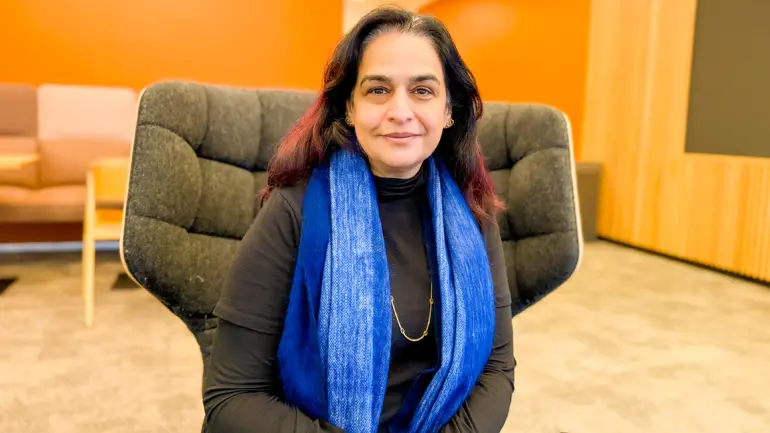
Inspired by Norwegian teachers during the occupation
Baily has been coming to Norway regularly since 2014, initially affiliated with Oslo Metropolitan University, later as part of the USN-led BRIDGES project in teacher education There she was one of three international advisors.
She uses Norwegian teachers’ resistance during the German occupation as an example when she teaches teacher students and teachers back home in Virginia.
“In the times we’re living in now, where authoritarian forces challenge democracy both in the US and in some European countries, we have to remember the important role teachers have. The classroom is, in a way, the front line in the defense of democracy. I was really inspired by an exhibit at Norway´s Resistance Museum a few years ago, about teachers’ resistance to the Nazis. These teachers were willing to sacrifice their freedom by refusing to teach the Nazi curriculum, and I find that very inspiring—especially in today’s USA”, says Supriya Baily.
Norwegian wool in Virginia
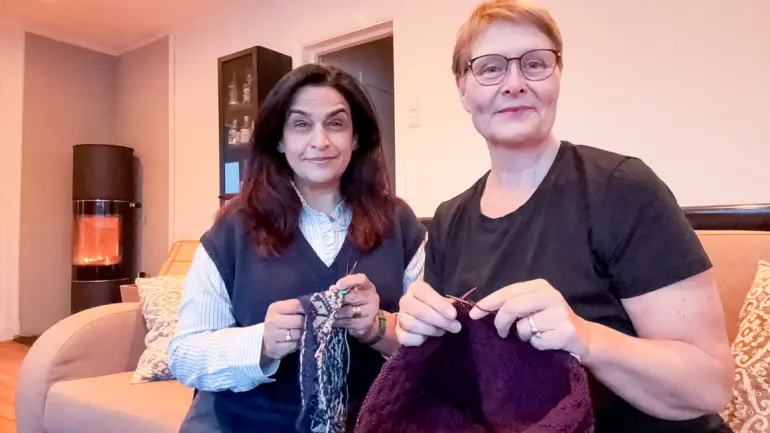
It’s not just the teachers’ resistance during the war that has inspired her. She’s become an avid knitter too—exclusively with Norwegian wool.
“I learned to knit from USN professor Heidi Biseth (who led the BRIDGES project before she became emerita, editor’s note). Now I always bring large amounts of wool back to the US and have gotten very familiar with Norwegian wool brands”.
Here Baily lists the names of wool shops in Drammen and the surrounding area, before she continues:
“The family back home in Virginia is outfitted with both hats and scarves in Norwegian wool. Now I’m getting started learning the Selbu pattern.”
“There’s a lot being written about the situation for American academics. What would you say to your Norwegian colleagues?”
“I’d encourage them to keep collaborating with us. We’re not giving up—we’ll keep doing our work despite the obstacles we face. Maybe we’ll keep a low profile for a while, but we won’t quit. We still need partners and collaboration in Norway. And those of us working in fields the current administration doesn’t like need support, like the support the Norwegian authorities have given me,” says a very grateful Supriya Baily.
Head of department: - Happy to be the host
Head of Department Jørn Varhaug at the Department of Culture, Religion and Social Studies says it’s been a great experience having Supriya at US N.
N.
“She’s curious, engaged, and wants to contribute to our teaching and research. Her research field, Social Justice and Equity, has been under pressure in the US, as many know. It’s been interesting for us to hear about her experiences of being opposed by politicians and her thoughtful views on this. I’m happy to be the host for a skilled and reflective researcher like Supriya, and to hear her insightful reflections on democracy and academic work in a time that’s challenging for many.”