 10.00
-
15.00
10.00
-
15.00
 Kongsberg, Becker Auditorium

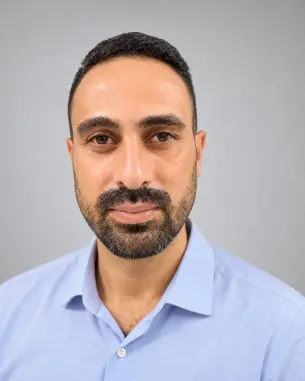
Haytham B. Ali is defending his thesis for the degree philosophiae doctor (PhD) at the University of South-Eastern Norway.
He has pursued the PhD program in Technology at the Faculty of Technology, Natural Sciences, and Maritime Sciences, Department of Science and Industry systems.
You are invited to follow the trial lecture and the public defence.
Summary
The data sensemaking framework developed in this PhD research supported concrete maintenance improvement actions at Oslo Metro. The research estimates an aggregate potential saving of approximately NOK 70 million per year for the Oslo Metro maintenance department. The research shows how operational data can support shared understanding and concrete actions to improve maintenance, reliability, and availability.
Many organizations already collect large amounts of operational data, such as failure data. However, they often struggle to connect what the data show with how their systems and maintenance processes actually work. Industrial requests often emphasize data-driven initiatives such as digitization, condition-based maintenance, and predictive maintenance. The framework starts by exploring the actual need behind such requests. In both case studies, this investigation revealed that the actual need is to improve system reliability.
Existing approaches often focus on either conceptual modeling or data analysis. Few combine both in a way that helps practitioners make sense of operational data in maintenance contexts. This thesis addresses that gap through a practitioner-oriented data sensemaking framework for operational maintenance contexts.
The framework consists of four phases: Value Proposition Investigation, Conceptual Modeling, Data Analysis, and Validation and Implementation. Conceptual Modeling and Data Analysis form the core of the framework. The two core phases proceed in parallel and support and guide each other through iterative and recursive application. The conceptual models help practitioners visualize systems and processes. They also guide what to investigate in the data. The data analysis, in turn, supports and refines the models. This iterative process continues until practitioners reach sufficient understanding of system behavior to support improvement actions.
The researcher first developed the framework based on a case study of an automated parking system in a small to medium-sized enterprise. He then applied, refined, and evaluated the framework in the more complex Oslo Metro maintenance context. In each case study, the researcher analyzed six years of failure and weather data. He also co-created conceptual models with practitioners.
In the Metro case, the research identified doors and compressors as critical subsystems. The analysis also found a correlation between door failures and temperature. Together, the conceptual models and data analysis helped close the internal maintenance feedback loop. They also supported concrete improvement actions.
The economic assessment includes an estimated 10% reduction in waste in corrective maintenance. This corresponds to approximately NOK 25 million per year. Applying a similar estimate to preventive maintenance gives approximately NOK 50 million per year when corrective and preventive maintenance are considered together. The company also estimated NOK 200 to 300 million in potential long-term savings. This estimate covers the remaining 10 to 15 years of the Metro fleet's lifetime. The thesis synthesis annualizes the long-term estimate and combines it with the maintenance estimate. This indicates an aggregate potential saving of approximately NOK 70 million per year.
The main contribution of the thesis is a practitioner-oriented data sensemaking framework. It bridges data science and Systems Engineering (SE) by combining conceptual modeling and data analysis. The framework helps practitioners connect operational data with system and process understanding. It also supports translating this understanding into improvement actions.
The framework has potential for application in other industrial contexts. However, its effectiveness beyond the studied maintenance contexts requires further evaluation. Successful implementation depends on data availability, quality, and ownership. It also requires complementary competencies in SE and data analysis. Facilitation skills and sustained involvement from key stakeholders are also important.