 10.00
-
15.00
10.00
-
15.00
 Drammen, Auditorium A5508

Lynn Dittrich is defending her thesis for the degree philosophiae doctor (PhD) at the University of South-Eastern Norway. 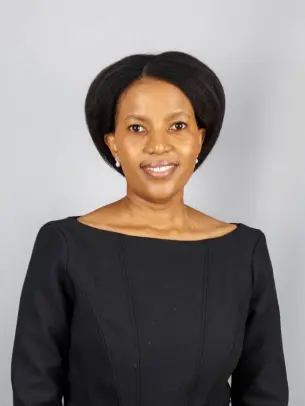
The doctoral work has been carried out at the Faculty of Humanities, Sports and Educational Science.
You are invited to follow the trial lecture and the public defence.
Summary
The thesis explores the opportunities and challenges associated with using mixed reality simulation to provide rehearsal opportunities for student teachers. It also sheds light on the professional learning opportunities made accessible through simulated learning contexts. The empirical data comprised video recordings of a simulation-based learning initiative that was implemented in an online teacher education programme in Norway in which pre-service teachers enacted and observed teaching in a simulated classroom. The instructional design included a briefing, a scenario-based simulation task, an educator-led debriefing and peer-led group discussions.
The study found that simulations hold pedagogical potential when aligned to learning outcomes and when followed by educator-led and student-led debriefs. In addition, professional learning opportunities are made accessible specifically through the moment-by-moment interaction between the participants: namely, the simulation specialist or interactor who, in real-time provided structured support to the students assuming the teaching role, the educator who facilitated reflection and the students who both gave and received constructive feedback.
Overall, the findings provide insight into the following:
- the students’ perspectives on the relevance of simulations for professional learning,
- the interactive processes between participants that facilitate professional learning opportunities and
- the multifaceted ways of knowing that simulation-based learning supports
Based on these findings, I argue that mixed reality simulations can serve as controlled and realistic contexts for rehearsing teaching, providing students dynamic learning opportunities which complement the practicum. I also argue that simulation-based learning supports engagement in different knowledge types and ways of knowing. The findings have implications for how university professional education might better engage students in more practice-based learning and in diverse ways of knowing, addressing the challenge that university teaching and learning tends to be heavily focused on theoretical knowledge.