 10.00
-
15.00
10.00
-
15.00
 Notodden, Rolf Bull-Hansen auditorium (S-322) and Zoom

Marie Skeie is defending her thesis for the degree philosophiae doctor (PhD) at the University of South-Eastern Norway.
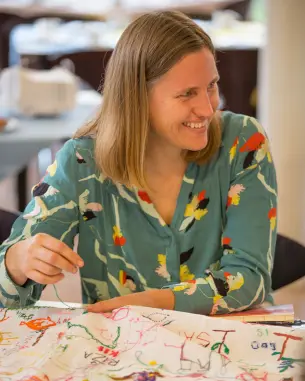 She has pursued the PhD program in Humanities, Cultural and Educational Sciences at the Faculty of Humanities, Sports and Educational Science, Department of Visual and Performing Arts Education at campus Notodden.
You are invited to follow the trial lecture and the public defence.
Summary
A new artistic research dissertation explores how land crafting and participatory textile practices can create spaces for sharing experiences and knowledge in collective situations in Palestine and Norway. Rooted in long-term engagement with collective making as an artist, the study examines material-based artistic practices as part of aesthetic, social, and pedagogical processes.
The research is drawing on posthuman thinking and new materialism to foreground relationships between humans, non-humans, materials, landscapes, and ecologies. The dissertation consists of four research articles, eight artworks, and an extensive summary, and includes projects such as The Stitch Project, Botanical Colour Laboratory, and Colours of Gaza, which use plant dyeing and textile practices to explore collectivity, participation, and place.
A key contribution of the study lies in its methodological approach, combining artistic research, a/r/tography, and creative practice ethnographies. The research emphasizes slow, aesthetic, and relational modes of analysis, where ethics, ontology, and epistemology are understood as entangled, and where response-ability and relational accountability are central to research practice.
The dissertation highlights local concepts such as mujaawarah (neighbouring), al mashaa’ (commons), and sumud (steadfastness) as emerging forms of collectiveness that embrace plurality and difference. It proposes a mujaawarah-centred pedagogy grounded in everyday life and the local landscape, demonstrating the relevance of participatory art and land-based practices for early childhood education in Gaza and beyond.