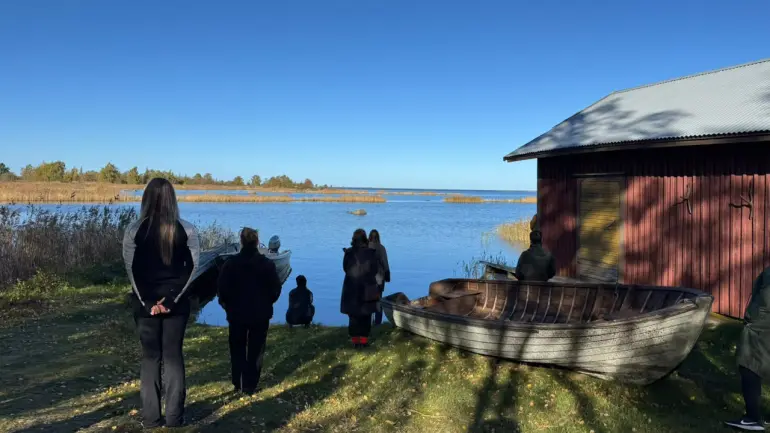
The overall theme of the network days was “Growing Sustainability and Nurturing Resilience in Higher Education (HE) and Early Childhood Education and Care (ECEC) through a Slow Lens.” ÅAU in Vaasa is housed in a historic brick building that once served as a mill, nestled beside a sheltered sea inlet. The building bears witness to the region's roots and heritage, offering a setting where past, present, and future intertwine.
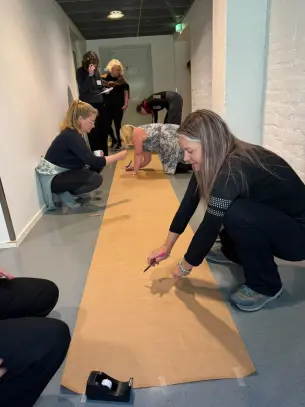 The network days brought together both new and established members across the Nordic region. There was great excitement in welcoming Sweden and Stockholm University as new members of the network! To create a shared foundation for the network days, the program began by revisiting the origins and development of the network. Participants engaged in group discussions on their understandings of slow and how such perspectives can foster sustainability and resilience in early childhood education and care (ECEC). These reflections were documented through Padlet and The River, a collective collage that is revisited and expanded upon at each network meeting. The afternoon was spent in the Kvarken Archipelago, a UNESCO World Heritage Site, where participants explored the relationship between slow, place, nature, and sustainability through a series of exercises for strengthened connectedness with nature and reflection on how a deeper connection to land and place can foster sustainability and resilience in ECEC. The program also included culture-based entries such as small-group book discussions of Maria Turtschaninoff's book Tangled Roots/Inherited Land (2022) and a visit to Björkö Church.
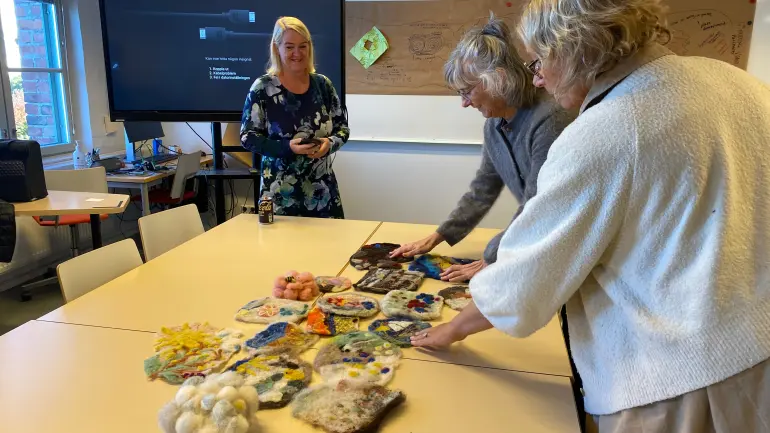
The second day began with an arts-based workshop led by Mia Porko-Hudd (ÅAU). Through crafting with wool, participants engaged with ideas of slowness, sustainability, and situated learning. In the afternoon, participants joined a seminar for ECEC staff entitled Growing Sustainability and Nurturing Resilience through Play.
The seminar included a keynote lecture by Alison Clark (USN), who explored how connections to place can support sustainability in ECEC. Drawing on research from diverse educational settings, she discussed the importance of place-based experiences. Anna Magnea Hreinsdóttir (University of Iceland) and Robert Lecusay (Stockholm University) engaged in a dialogue lecture in which they shared experiences from an Icelandic-Swedish Erasmus collaboration. Focusing on social sustainability and adult-child imaginative play, they reflected on the connections between play, time, and early childhood education. The seminar concluded with a panel discussion that invited participants to continue the dialogue and exchange perspectives on sustainability, resilience, and pedagogical practice. The day ended with an opportunity for informal networking and a traditional Finnish winter bathing experience, including sauna and swimming in the sea.
On day three, there was a meeting regarding future acitivities in the network related to publishing, future meetings, and possible collaborations within research and teaching. Some participants visited an ECEC setting in central Vaasa, located in recently renovated military barracks from the late 1800s. The focus areas of the setting are “environmental thinking, strengthening the we-spirit, and play” and visitors engaged in discussions with staff and further thinking about how the architecture, yard, and place might shape the day-to-day practices of playful learning in ECEC. Before departure, all participants met to sum up their experiences of the three days and to share insights related to the core themes of sustainability and resilience, and especially to dwell with the question of how nature-based and culture-based approaches can contribute to slow within ECEC research, teaching, and practice.