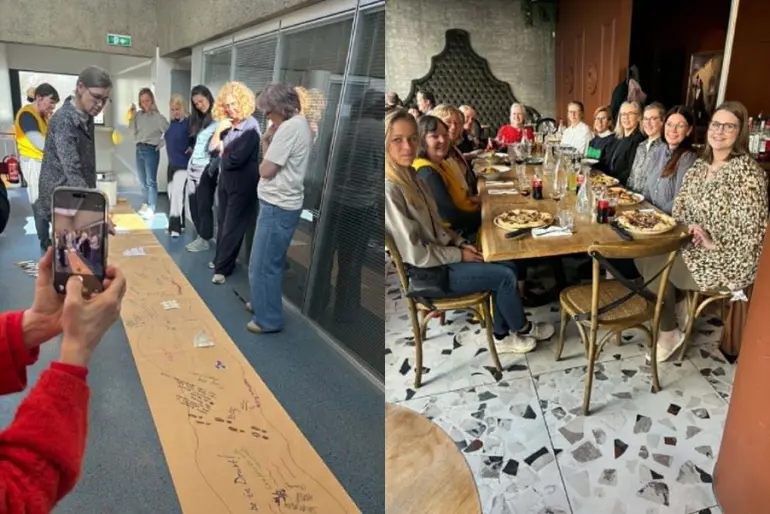
The Nordplus workshop and conference Reclaiming Slow in Nordic Early Childhood Education and Care, held at the University of Iceland in May 2026, brought together Nordic researchers, teacher educators, preschool leaders and practitioners to explore the meaning and possibilities of slow pedagogy and leadership in contemporary education. The event combined network planning, collaborative reflection, workshops and an open conference focused on both early childhood education and higher education.
A central theme running throughout the workshop was the reclaiming of time, presence and relational depth in educational practice. Discussions addressed how increasing speed, accountability pressures and fragmented working conditions affect both children and professionals, and how slow pedagogical approaches may create spaces for participation, wellbeing, democracy and deeper learning. The programme highlighted the importance of pedagogical leadership in creating cultures where reflection, continuity and meaningful relationships can flourish.
The workshop included dedicated sessions on slow leadership in ECEC and on the role of slow pedagogy in higher education. Contributors explored embodied artistic thinking, inclusion and “crip time,” and reflected critically on both the possibilities and limitations of slow approaches within universities and professional education. Dialogue between researchers and leaders from the Icelandic Stilla project connected theoretical ideas about slowness with everyday leadership practices in preschools.
The open conference, Finding the Rhythm: Slow Early Childhood Education in Practice, extended these discussions by focusing specifically on slow pedagogy in preschool practice. International keynote speakers including Alison Clark, Karin Hognestad, Marit Bøe, Mia Helena Heikkilä and Julie Borup Jensen examined themes such as pedagogical leadership, relational practices, hope, resilience, playful cultures and the temporal dimensions of educational encounters.
Hæglæti í leikskólastarfi bætir félagsfærni, sköpun og leik | Háskóli Íslands
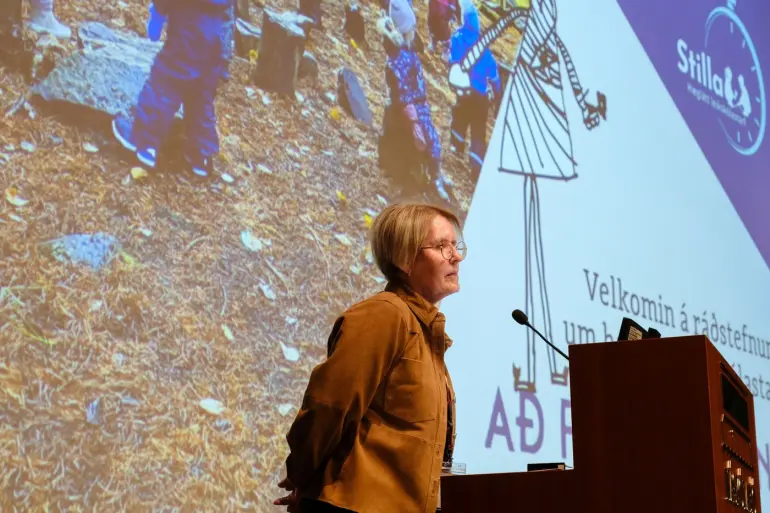
An important feature of the conference was the strong connection between research and practice. Icelandic preschools participating in the Stilla project shared concrete experiences of implementing slow pedagogy in daily work with children. Presentations from preschools Rauðhóll, Aðalþing, Ugluklettur and Iðavöllur demonstrated how slow pedagogy can influence children’s participation, care practices, relationships, transitions and the overall rhythm of preschool life. These presentations illustrated that slow pedagogy is not understood as “doing less,” but rather as creating conditions for attentiveness, continuity, agency and meaningful engagement.
Across the workshop and conference, recurring ideas included:
- reclaiming time for reflection and relationships,
- strengthening democratic and participatory practices,
- supporting professional wellbeing and sustainable leadership,
- valuing embodied, relational and creative forms of learning,
- and resisting cultures of acceleration in both ECEC and higher education.
The event also served as an important milestone for the Nordplus network’s first year of collaboration. Alongside the academic programme, network members reflected on future directions, shared experiences through collaborative activities such as “The river and Padlet” and “The meeting of the avatars,” and planned next steps for continued Nordic cooperation on slow pedagogy research and development.